Engine/Effects/Visual Enhancement

Image Teaching Visuals

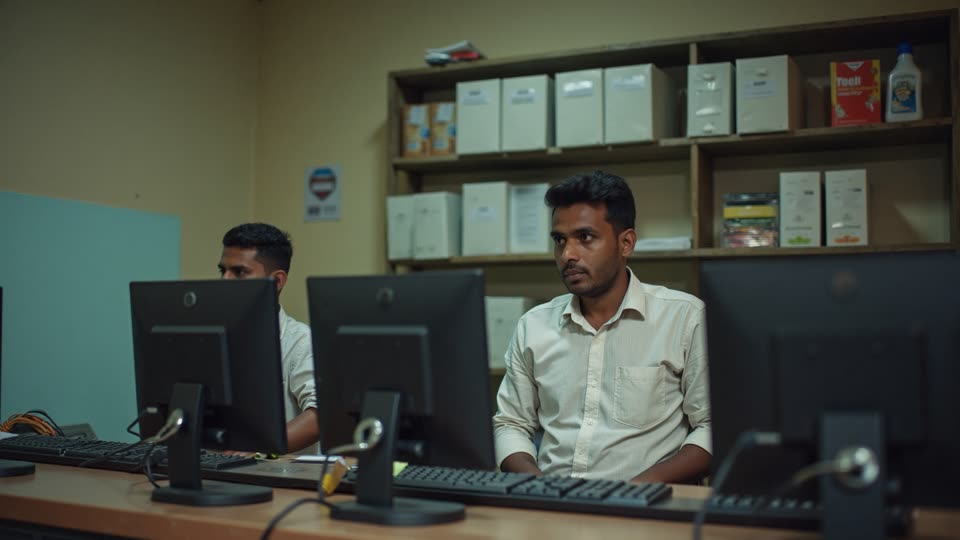
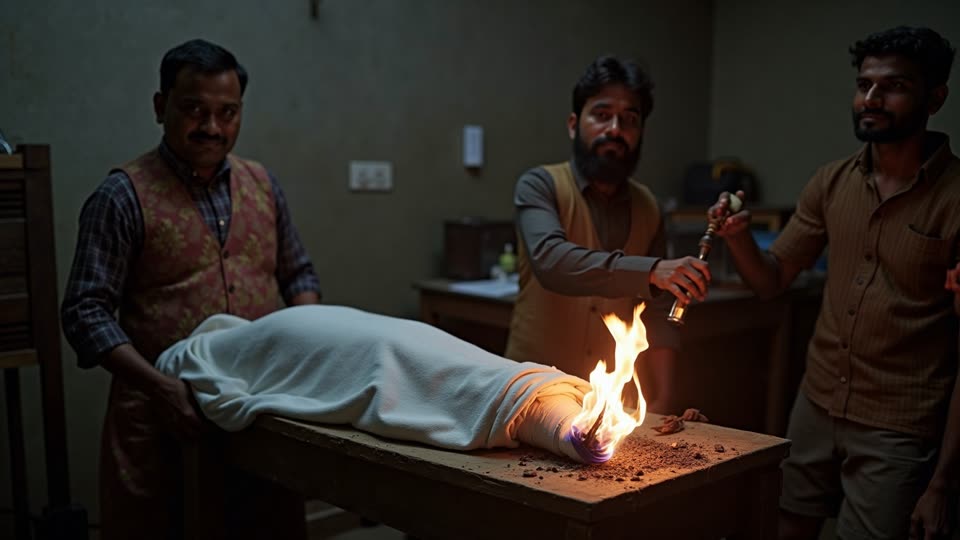
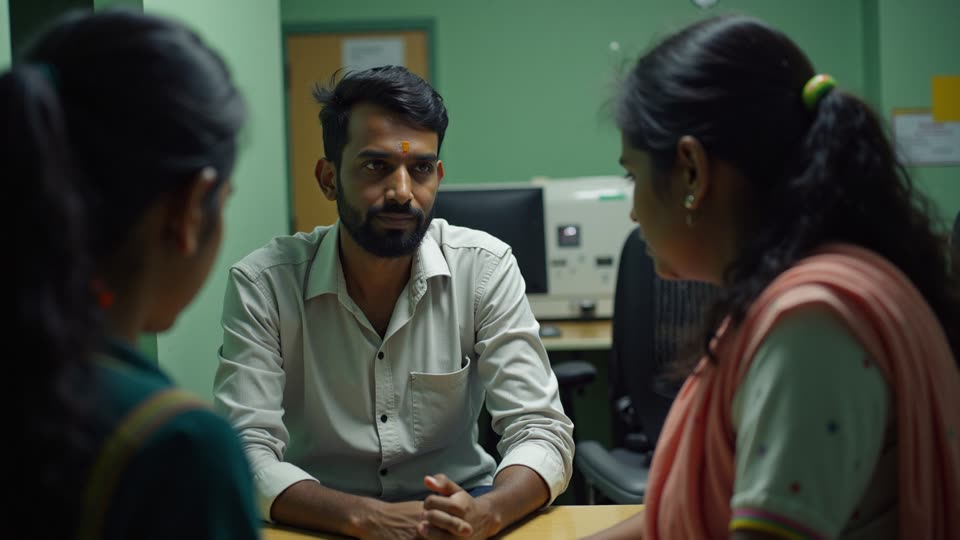
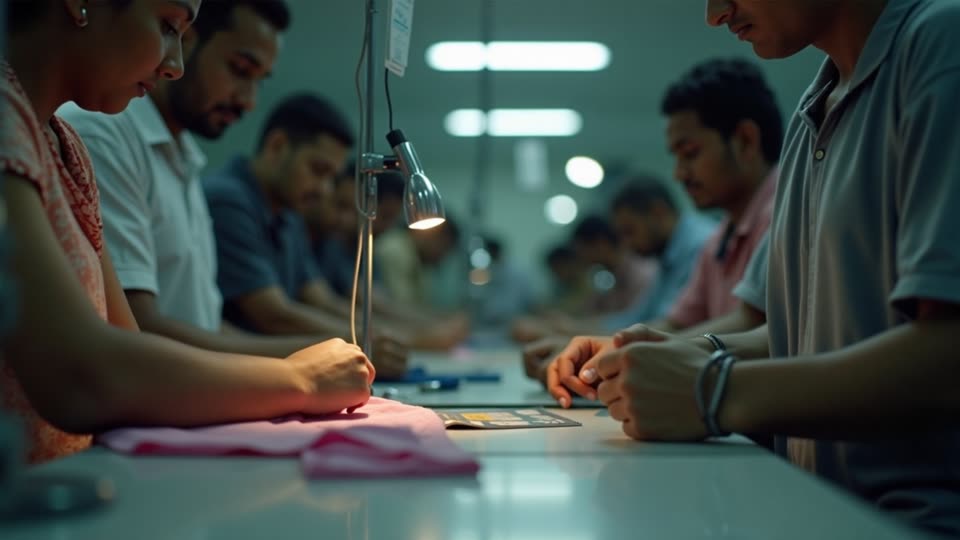
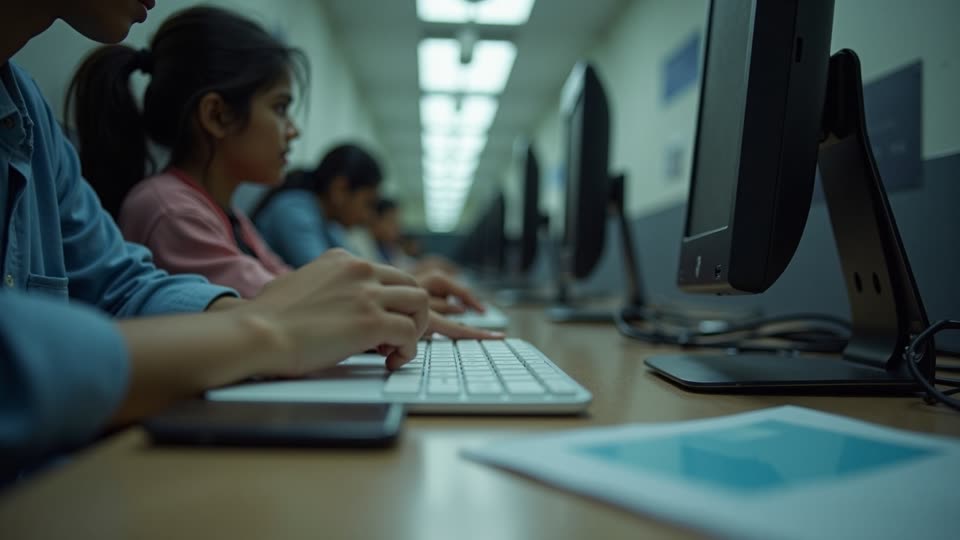
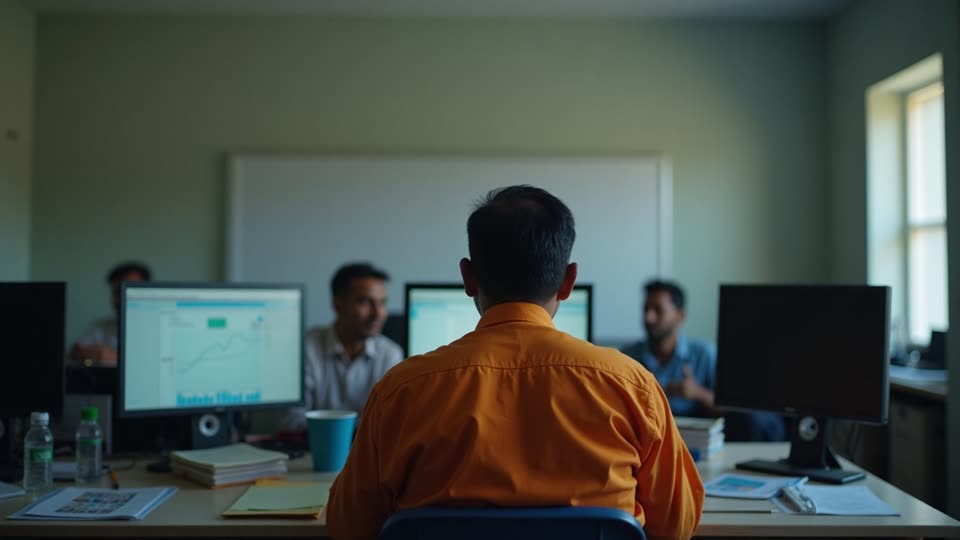
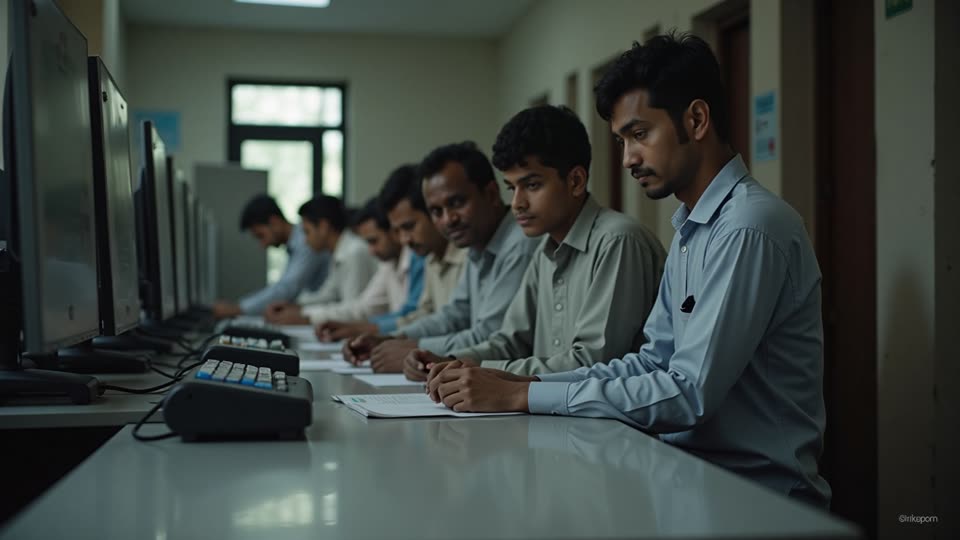
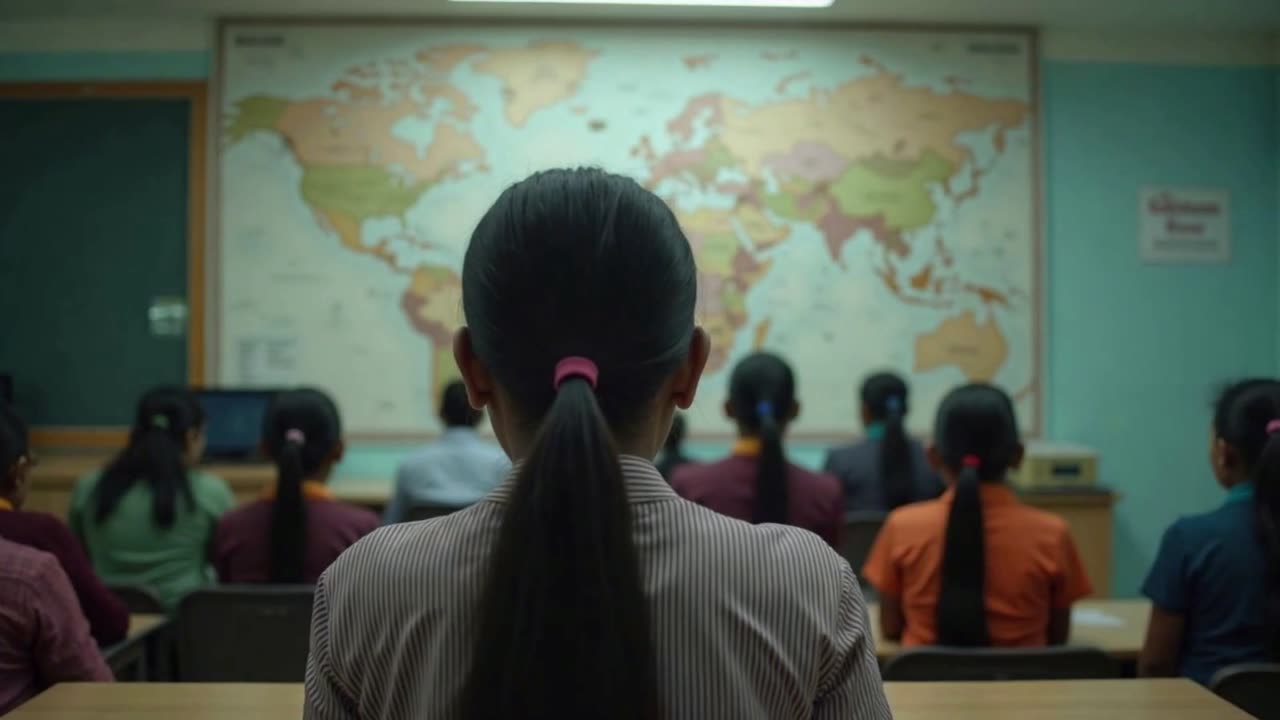
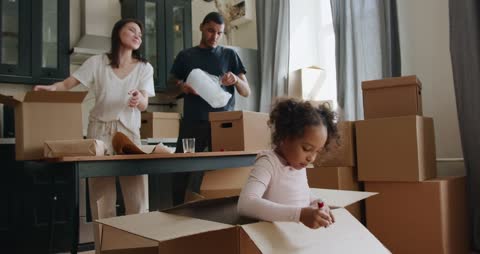
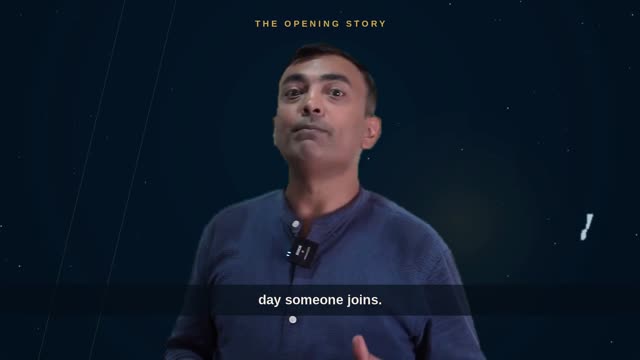
At chosen moments the lecture cuts full-screen away from whatever is on screen to a photograph of what is being said: real-looking people in a real-looking place, doing something concrete. The still is generated to a written brief, checked for any writing in frame, given a slow camera move, and held for exactly the phrase it illustrates, with the captions running on top the whole time.

Generated photographs, moved by camera

The finished effect

What it looks like when it is done.

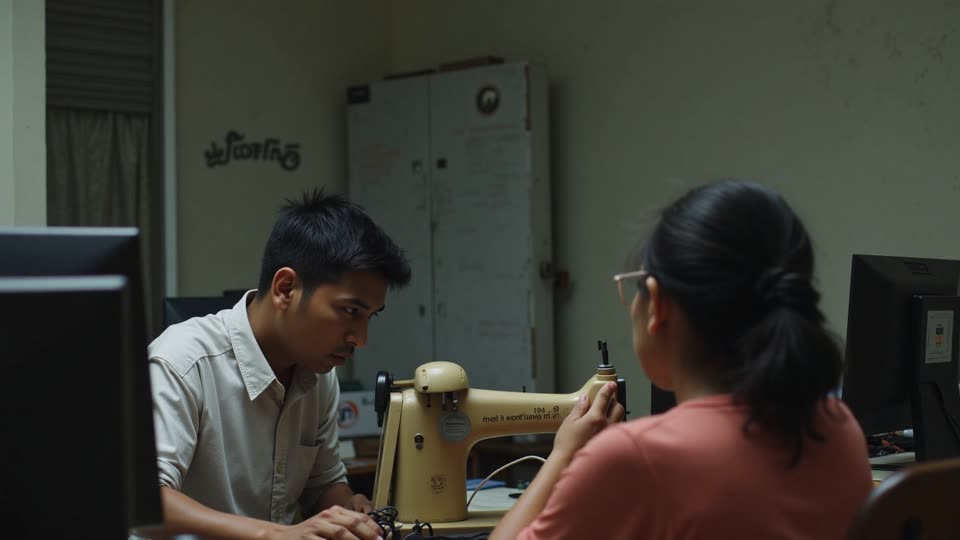
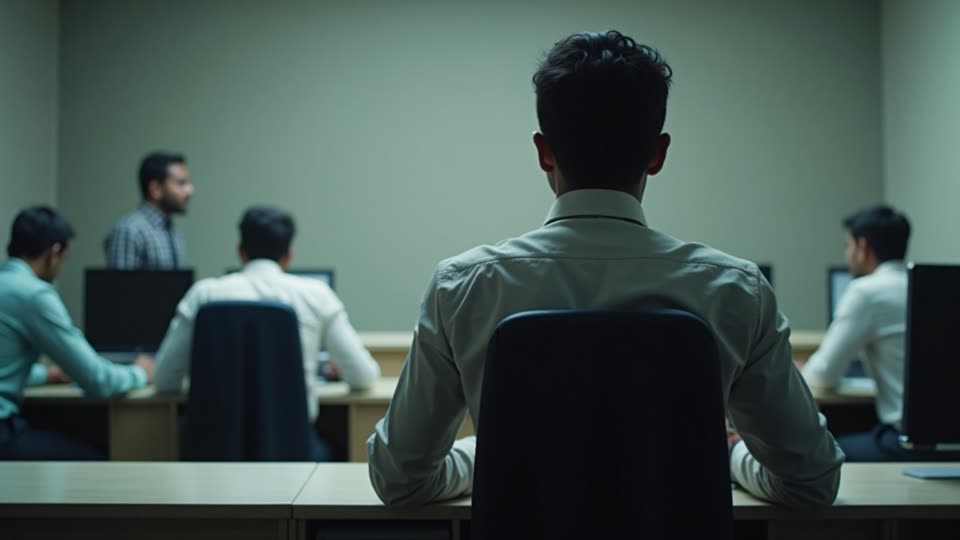
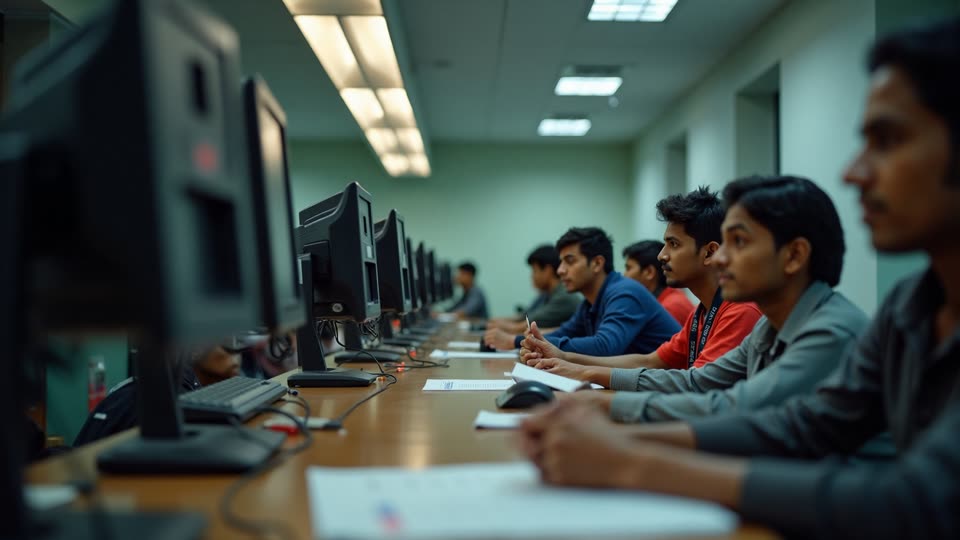
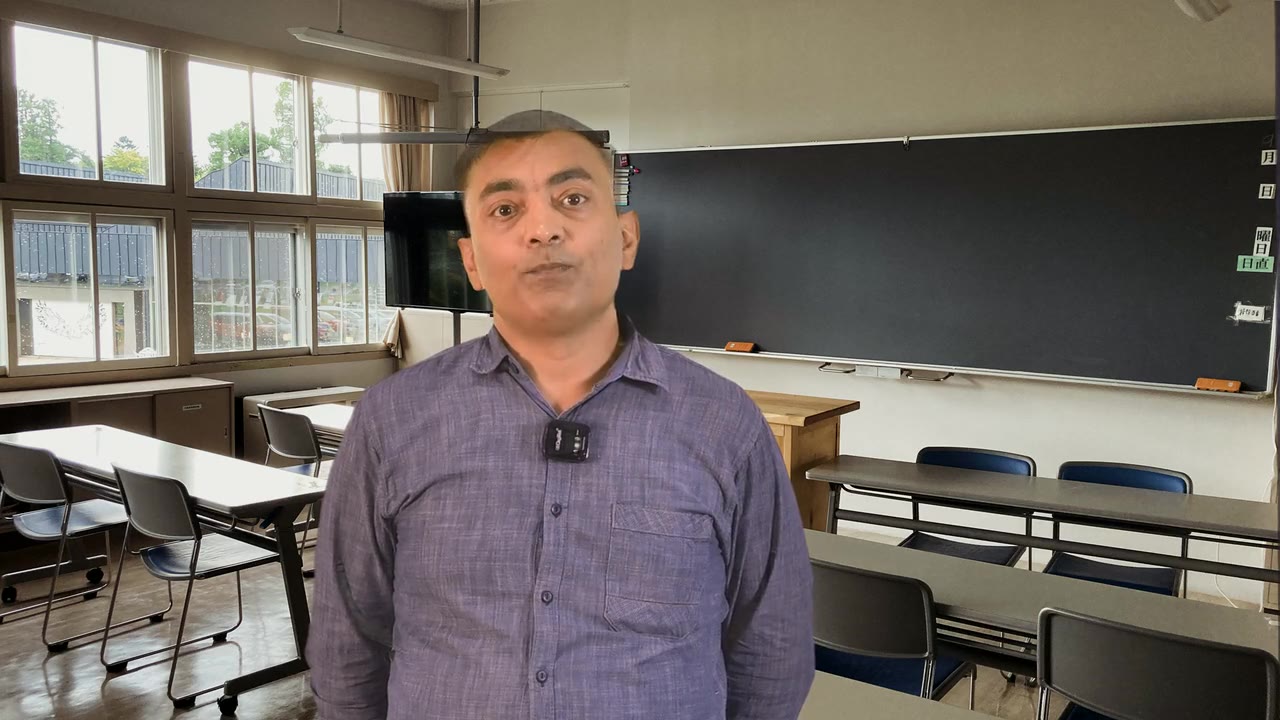
Twenty-five seconds of the 22-minute Indian Wisdom lecture used throughout this page (2:55 to 3:20 of the lecture): two generated stills cut into a Full Animated Lecture chapter, each held for about five seconds with a slow camera move, the caption band carried straight through.

25 s · 1920 × 1080 · with sound

Overview

What it is, and why it exists.

Image Teaching Visuals are photoreal cutaways. The engine does not draw them and does not search for them: it writes a brief from the lecturer's own sentence and asks the image model for one photograph that shows it. The photograph is then given a slow push, pull or pan so that it reads as a shot rather than a slide, and cut into the finished lecture over the phrase it belongs to. It is the middle rung of a three-rung source ladder: real stock footage is tried first, a generated still second, and a drawn cutaway last.

The problem it solves is the one every recorded lecture has. Twenty minutes of a speaker and slides is honest but visually flat, and a student decides in the first minute what kind of video this is. A photograph of a trainee at a bank counter, a garment factory floor or two colleagues in conversation, arriving for five seconds on the line that describes it, makes the lecture look produced rather than recorded, and it gives the eye somewhere to go without taking the ear away from the teaching.

It runs late in the build. The composition plan decides where every cutaway goes, what kind it is and which sources it may use; this effect only fills the windows the plan marked as Image. It depends on the cleaned word timeline (so every cut lands on a phrase boundary), on the caption renderer (so the word highlight survives the cut), and on the plan's real-entity gate, which it re-checks itself before any generation is requested.

It sits over any base layout. In the reference lecture, twelve stills cut away from the full animated lecture, six from Presenter + Animated, two from Presenter + Captions and two from Presenter Centred. The effect does not care what it is cutting away from; it replaces the whole frame for the length of the phrase and then hands the frame back.

2 stills a minuteTarget
1 picture a minute, never breachedFloor
5 s ideal, 6.5 s maxClip length
at most 18% of runtimeGenerated share
none in first 15 s or last 25 sQuiet zones
2048 x 1152 requestedStill size
push in, pull back, pan left, pan rightCamera moves
zero; OCR-checked, one retryText in frame

How it is made

Step by step, in the order the engine runs it.

Phrase the lecture

The cleaned word timeline is grouped into caption phrases: a break at punctuation, at any pause longer than 0.42 s, at 9 words, or after 3.6 s of running speech. Every cutaway edge must sit exactly on one of these phrase boundaries, so a picture never arrives or leaves in the middle of a word.

Build the candidate pool

Every run of one, two or three adjacent phrases between 2.8 s and 7.5 s long becomes a candidate window, unless it falls in the first 15 s or the last 25 s, crosses a beat or layout boundary, or sits within 1 s of a layout change. Each is scored: 2 points per picturable noun, 3 for an explicit list, 3 for an explicit comparison, 2.5 for a named process, 1.5 for a number that is not a year, minus 4 for a purely connective phrase. Anything under 4.0 is discarded. The reference lecture produced 157 candidates above the bar.

Gate for real entities and documents

Before a window can be a generated photograph it must pass two absolute gates. If it names a real company, brand, masthead, institution, public figure or country adjective, generated imagery is forbidden. If it reads as a document, chart, statistic, survey, report, headline or screenshot, generated imagery is forbidden. It must also contain a noun a camera could actually be pointed at, found by shape: a determiner followed by a noun that is not an abstraction.

Place the stills

Generated video takes first pick of the windows. Stills and drawn cutaways then take turns, each turn going to whichever kind is further behind its own per-minute target, inside the 18% ceiling for generated cutaways. Windows must start at least 6 s apart, never touch, never exceed 14 in any 120 s, and never land on the animated lecture's set pieces: a title, a definition being read out, or a quotation. If the one-picture-a-minute floor is still unmet, spacing may close to 3 s to meet it.

Write the brief

For each Image window the engine writes the prompt from the speaker's own sentence, not from a keyword. Capitalised proper names are stripped, the line is capped at 16 words, and up to two concrete subjects from the gate are appended. It then adds a setting, a camera position, the cast, the look and the exclusions, in that order.

Re-check the gate

At the last point before a generation is requested, the sentence is checked again against a list of real brands and places and against the document-like words. A window that fails is not generated at all; it is logged and left for the drawn layer or the layout underneath.

Generate the still

The still is requested from the image model at 2048 x 1152, larger than the 1920 x 1080 frame so the camera move has real pixels to travel into. If the model refuses that size, 1920 x 1088, 1536 x 864 and 1344 x 768 are tried in order, and the first accepted size is remembered for the rest of the lecture. The job is submitted, polled every 3 s, and abandoned loudly after 420 s rather than left to hang.

Check it for writing

The downloaded still is read by OCR. Four or more runs of three or more letters means there is writing in frame. The still is regenerated once with a stricter instruction; if the second one also carries writing, the cutaway is abandoned rather than shipped.

Give it a camera move

The still is turned into a 30 fps shot exactly as long as its window, with one of four moves: a slow push in, a slow pull back, a pan right or a pan left. The move is chosen by the cutaway's id so that neighbouring stills tend to move differently. Output is 1920 x 1080, high-quality encode, no audio.

Cut it in, captions on top

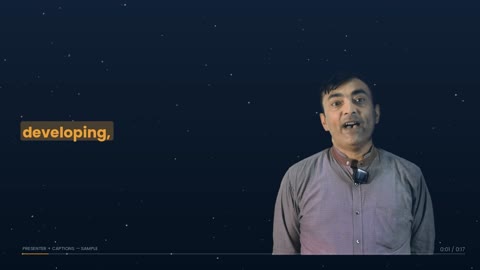
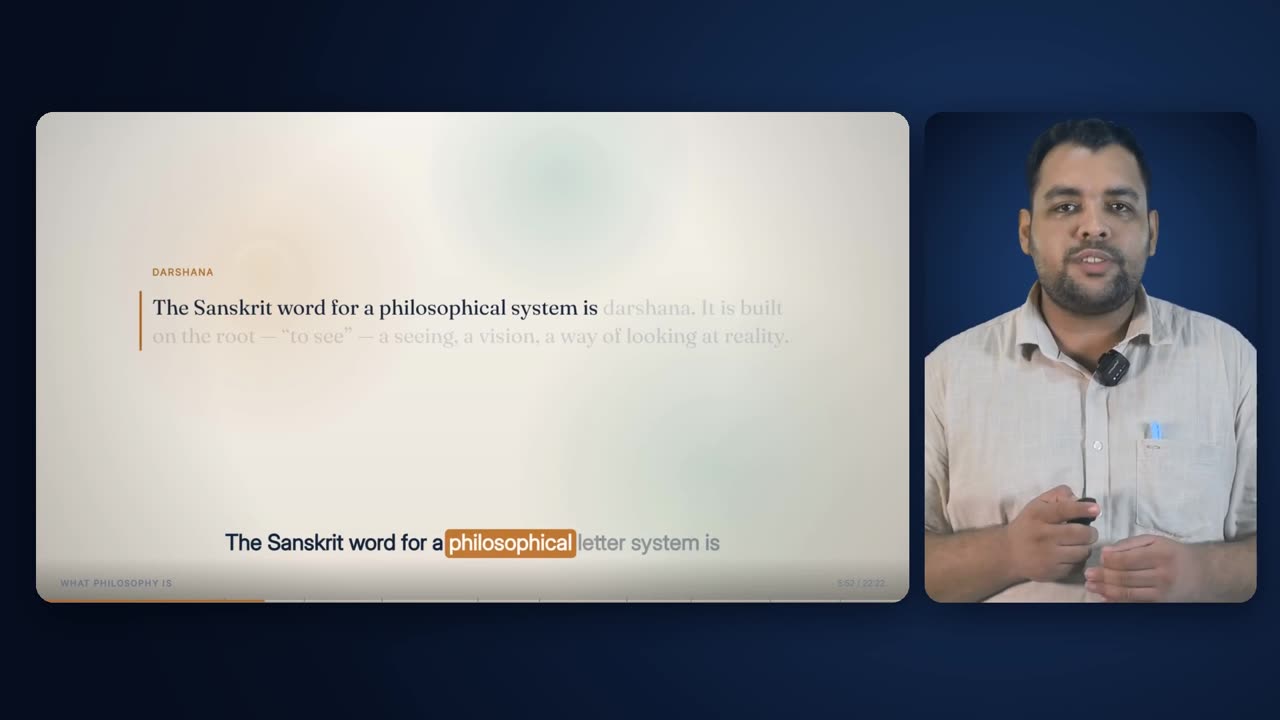
At assembly the cutaway replaces the whole frame for its window. The caption band is rendered on transparency by the same renderer that draws it everywhere else and composited over the photograph frame by frame, so the current-word highlight never stops. The lecture's studio audio runs underneath untouched.

Record and fall back

Every still is kept on disk under its cutaway's permanent id and reused on the next run. Anything that failed is recorded with its reason. At assembly a window with no usable clip plays a drawn cutaway if one exists for that id, otherwise the layout underneath, and the assembly record says which.

Elements

Everything this effect puts on screen, one piece at a time.

Each element below is shown as the engine actually produced it, in the real lecture, with its parts, and the rules that govern it.

Fourteen seconds of the finished lecture: the full animated lecture cuts to a generated still on “A successful life. The tradition insists they are the beginning of wise” and back again, captions running throughout.
01

The cutaway window

A full-frame replacement, exactly one to three phrases long.

A cutaway is a punctuation mark, not a scene. The window is chosen by the composition plan from phrase boundaries, so it opens on the first syllable of a phrase and closes on the last. At four to five seconds it reads as emphasis; held at seven or eight it starts to feel as though the lecture has stopped. Length is also what makes the quota affordable in screen time: the same twenty-six cutaways are 24% of a runtime at 7.4 s each and 16% at 5 s. Inside the window the photograph owns the whole frame, the base layout is hidden, and nothing about the audio changes.

Anatomy
  • Edges on phrase boundaries, never mid-word
  • Ideal 5.0 s, maximum 6.5 s for a generated clip
  • Replaces the full 1920 x 1080 frame
  • Captions redrawn on top for the whole window
  • Studio audio untouched
Rules
  • Never in the first 15 s or the last 25 s
  • Never across a beat or layout boundary, never within 1 s of a layout change
  • Never on a title, definition or quotation set piece
  • At least 6 s between the starts of two cutaways, and they never touch
The first still in the lecture, at 0:42, on “Moksh, the self, the good life” — score 5.0; brief: a bank branch counter, medium two-shot, the self and the good life.
02

The candidate score

Decides whether a sentence is worth a picture at all.

Every window is scored for whether it contains a picture. Concreteness is judged by shape rather than by a word list: a determiner such as a, the, this or three, followed by a noun that does not end in an abstraction suffix like -tion, -ment, -ness or -ity. “A factory floor” passes; “the performance” does not. Lists, comparisons, named processes and numbers add points; a phrase that begins with a bare connective and names nothing loses four. The 4.0 threshold is what stops the planner filling a budget with weak moments, and a lecture that is abstract for two minutes will honestly have no photographs in those two minutes.

Anatomy
  • 2.0 per picturable noun
  • 3.0 for an explicit list of three or more
  • 3.0 for an explicit comparison
  • 2.5 for a named process
  • 1.5 for a number that is not a year
  • minus 4.0 for a pure connective
  • minus 2.0 if the same subject was pictured within 90 s
Rules
  • Below 4.0 is never a generated still
  • A second, wider pool with no score bar exists only for drawn cutaways, never for photographs
  • Words such as path, story, journey, concept or example make a passage worth illustrating but not photographable
At 10:07, “Atman, the innermost self, Brahman, the ultimate reality behind all things” — names stripped before sending; brief: a tailoring workshop, over-the-shoulder, the innermost self and the ultimate reality.
03

The real-entity gate

An absolute rule: nothing real is ever generated.

A generated photograph of a real brand, a real building, a real publication or a real person is a fabricated depiction of something that exists, published under a university's name. So any window that names a company, brand, masthead, institution, public figure or country adjective is forbidden to the image model. It can still be covered by real stock footage, where the thing actually exists on camera, or by a drawn cutaway, which nobody mistakes for a photograph. The gate runs in the planner, is re-checked after placement, and runs a third time inside the generator immediately before any request is made.

Anatomy
  • Planner gate: named platforms, companies, broadcasters, regulators, country adjectives, named authors
  • Document gate: chart, graph, statistic, study, report, survey, percent, headline, screenshot, front page, masthead
  • Generator gate: a second list of brands and places, checked at the last moment
Rules
  • A failed gate means no generated imagery for that window, ever
  • Document-like windows are drawn only: real footage of a chart carries on-screen text too
  • The gate verdict is written into the plan for every cutaway
At 2:57, “he has arrived, and yet a little before dawn, he cannot sleep” — brief: a small workshop with hand tools, over-the-shoulder.
04

The brief

The speaker's own sentence, cleaned, as the subject of the photograph.

Early versions sent the planner's single-noun subject to the model and got prompts like “day” and “every”, which describe nothing. An image model reads a phrase far better than a token, and the phrase is already there: it is the line the cutaway sits on. So the brief is the sentence itself. Every capitalised proper name is removed first, because a generated picture of a named person or place is a fabrication; the line is cut to 16 words; and up to two concrete subjects found by the gate are appended to anchor it. Where a story beat is only a fragment, a hand-written brief can replace the derived one for that cutaway, and the cast, look and exclusions still apply.

Anatomy
  • Order: Setting, Shot, “A scene showing” the sentence, cast, look, exclusions
  • Proper names stripped
  • At most 16 words of the line
  • Up to two gate subjects of four letters or more, generic words removed
Rules
  • Never the institution, instructor, platform or course code
  • A hand-written override keeps every other rule
  • The brief is kept with the still so one cutaway can be regenerated alone
At 3:35, “Below him, a priest lowers a brace lamp to the river” — no place named, so the old workplace rotation supplied the setting; medium two-shot.
At 3:35, “Below him, a priest lowers a brace lamp to the river” — no place named, so the old workplace rotation supplied the setting; medium two-shot. (Made before 22 Sep 2026, under the old office-first rule — this philosophy lecture would now be set in its own world.)
05

The setting

Where the photograph takes place.

Left to itself the model answers every abstract sentence with the same picture: an open-plan office, monitors, a meeting. So the setting is decided before the model sees the prompt, in three steps. First, the place the sentence itself names: a line about a village goes to a village, a family to a home, a cashier to a shop counter, a river to a riverbank, a phone to someone on a phone with the screen turned away. Second, when the line names nowhere, the world of this course: a philosophy lecture is set in courtyards, on riverbanks, in libraries and under a tree with a teacher and students; a media lecture at home, on a train, in a café or a creator's set-up; marketing in bazaars and shops; economics at ports, farms and markets; accounting at a counter at closing time or a kitchen-table budget; only management and HR courses default to workplaces. Third, when the line names no place but is about something — stock, a loan, a budget, a harvest — every setting in that world (and in everyday India: homes, streets, campuses, platforms, tea stalls, farms) is scored on how much of the sentence it answers, and the best one is used: “closing stock” and “purchase returns” go to a warehouse being counted, “interest on a loan” to a bank counter. A room used recently is penalised, so no two neighbours look alike and one room never carries the lecture. Only a sentence that names nothing at all falls back, and then to one of three anchor settings from the course's own world — never to an unrelated room. That blind fallback is how a line about purchase returns was once illustrated with a hospital corridor. No real place is ever named, and at most about one picture in three may be set in an office-like room.

Anatomy
  • About 23 place rules read from the sentence: village and farm, family home, kitchen, city street, market, campus, phone, newsroom, river and landscape, railway, teacher and students, quiet reflection, shop, factory, bank, hospital, warehouse, workshop, training and interview rooms
  • A world for each kind of course: philosophy, media, marketing and services, economics and policy, law, health and wellness, environment, accounting and finance, research methods, and management and HR
  • 18 everyday Indian settings mixed into every world: homes, markets, village lanes, campuses, platforms, tea stalls, buses, ghats, parks, farms, classrooms
Rules
  • A place named in the sentence always wins; otherwise the setting is scored against what the sentence is about
  • Every shot is listed in broll_settings.json with how its setting was chosen, before anything is bought
  • Never an office by default: at most about one picture in three in an office-like room, and the dry run warns above that
  • No real place is ever named
  • No two neighbouring stills should read as the same room
At 3:43, “and flame. And a body wrapped in white is carried unhurried” — brief: a bank branch counter, medium two-shot.
06

The camera position

Six framings, rotated so the film does not repeat itself.

A set of photographs all taken from the same eye-level distance looks like one photo shoot, however different the rooms. The brief therefore names a framing, drawn from a rotation of six: a wide establishing shot, over-the-shoulder, close on the hands at work, a medium two-shot, from behind looking past the subject, and a low angle across a counter. The framing is keyed to the cutaway's permanent id, so it is stable across re-runs: regenerating one still does not reshuffle the framing of every other.

Anatomy
  • wide establishing shot
  • over-the-shoulder
  • close on the hands at work
  • medium two-shot
  • from behind, looking past the subject
  • low angle across a counter
Rules
  • Chosen by the cutaway's id, so re-runs are reproducible
  • Stated in words in the prompt, never left to the model
At 3:12, “rises in him that no appraisal, no salary has ever named” — brief: a bank branch counter, medium two-shot, appraisal and salary as subjects.
At 3:12, “rises in him that no appraisal, no salary has ever named” — brief: a bank branch counter, medium two-shot, appraisal and salary as subjects. (Made before 22 Sep 2026, under the old office-first rule — this philosophy lecture would now be set in its own world.)
07

The cast

Who is in frame: Indian people who belong in the scene, varied in age and gender.

These lectures are made for Indian universities, and a course in which every face is Western quietly tells the student it was not made for them. Image models default to Western-coded people unless told otherwise, so the cast is stated in every prompt: Indian people, South Asian faces, dressed as people really dress in that place and neat, relaxed and engaged, a natural mix of women and men and of ages — students and teachers, families, shoppers, farmers, commuters or staff, whoever the course's world is made of. Where the sentence describes someone by career stage, the age is stated too, because a lecture about a newly promoted branch manager illustrated with a grey-haired shopkeeper argues against itself.

Anatomy
  • “newly made”, “newly promoted”, “first morning”: early thirties
  • “new cashier”, “trainee”, “freshly hired”, “student”, “young”: twenties
  • “steadiest”, “experienced”, “senior”, “veteran”, “owner”, “elder”: forties or older
Rules
  • Indian by default, stated explicitly in every prompt
  • Ordinary and contemporary, never a caricature or a festival set piece
  • No famous person, ever
  • Philosophy and religion: no deities or idols, no symbol of one faith, no identifiable temple or holy site
At 10:32, “took shape. Then, in the classical period, each school condensed itself into” — brief: a quiet back office, medium two-shot, in the default bright look.
At 10:32, “took shape. Then, in the classical period, each school condensed itself into” — brief: a quiet back office, medium two-shot, in the default bright look. (Made before 22 Sep 2026, under the old office-first rule — this philosophy lecture would now be set in its own world.)
08

The bright look

The default light: bright, warm and well kept — wherever the scene is.

One fixed paragraph describes the photographic look on every call, so that twenty stills generated minutes apart belong to the same film. It is deliberately bright. Asking for an ordinary Indian workplace in a muted documentary style returned exactly what those words mean to a generator: dim rooms, tired people, peeling paint. A student watching a lecture on good practice was being shown a picture of failure. The picture should look like the life the course is preparing them for, so the default is a bright natural photograph in generous light. The look is only a photographic style: it names no place. It once said “office”, and that single word put a philosophy lecture into offices; the place now comes from the sentence and the course.

Anatomy
  • bright natural editorial photograph
  • generous natural light
  • well-kept surroundings
  • warm and optimistic colour
  • natural and unposed, shallow depth of field, 16:9
Rules
  • Reused word for word on every still in the lecture
  • One image model for the whole lecture: switching mid-lecture is a style-drift risk
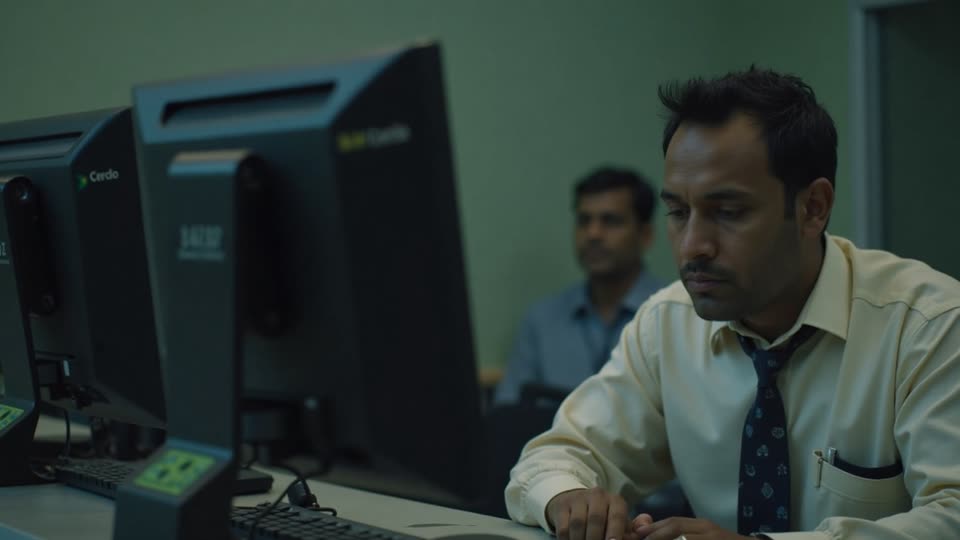
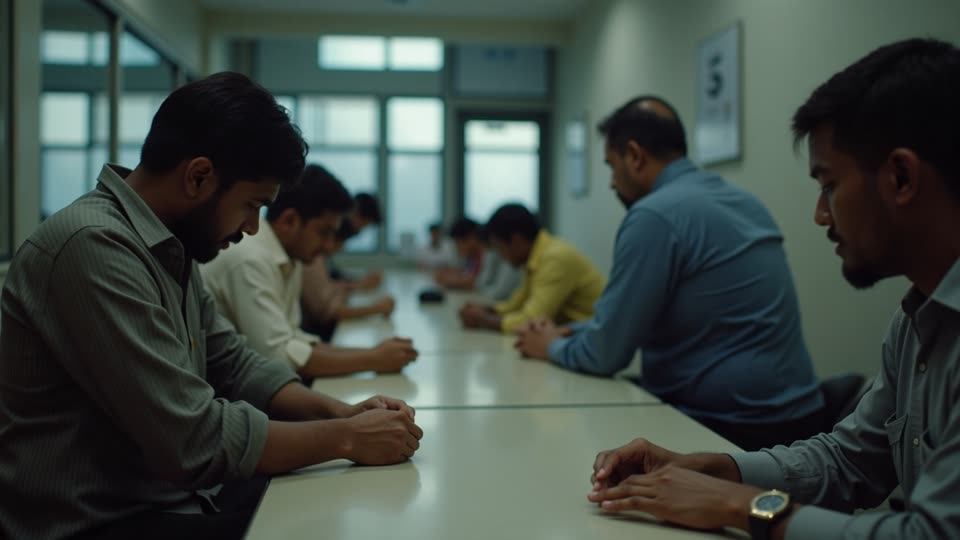
At 19:46, “came to philosophy almost by accident through a cousin's cast-off” — the word “accident” switched this brief to the sober look; open office, medium two-shot.
At 19:46, “came to philosophy almost by accident through a cousin's cast-off” — the word “accident” switched this brief to the sober look; open office, medium two-shot. (Made before 22 Sep 2026, under the old office-first rule — this philosophy lecture would now be set in its own world.)
09

The sober look

Reached only when the lecturer's own sentence calls for it.

A passage about a layoff, a strike, a grievance, an unsafe workplace or real hardship is not served by a sunny open-plan office, and prettifying it would misrepresent the teaching. So a second look exists: a documentary photograph with harder light, worn surfaces and sober restrained colour, in whatever place the scene is set. It is reached by a deliberately narrow list of words in the cutaway's own sentence, and nothing else triggers it. In the reference lecture it fired twice in thirty-one generated cutaways: once on “poverty” and once on “accident”.

Anatomy
  • documentary photograph
  • harder light, worn surfaces
  • sober restrained colour
  • natural and unposed, shallow depth of field, 16:9
Rules
  • Triggered only by words such as retrenchment, layoff, dismissal, strike, dispute, grievance, unsafe, accident, injury, poverty, debt, crisis, closure, unemployment, harassment, discrimination, burnout, stress, hardship, pollution, drought, flood
  • Anything not on the list gets the bright look
At 13:44, “A darshan is not complete until it becomes a discipline of living and ethics” — open office, medium two-shot, every screen switched off.
At 13:44, “A darshan is not complete until it becomes a discipline of living and ethics” — open office, medium two-shot, every screen switched off. (Made before 22 Sep 2026, under the old office-first rule — this philosophy lecture would now be set in its own world.)
10

The exclusion clause

No text, no logos, no charts, stated as things that are true of the frame.

Generated lettering is gibberish at best, and a plausible-looking chart on a monitor is a fabricated statistic on a university's video. The image model has no separate negative prompt, and in practice an instruction such as “no charts” is ignored while “blank switched-off monitors” is obeyed. So the exclusion clause is written mostly as positive description of the frame, followed by the plain prohibitions, and appended to every prompt without exception.

Anatomy
  • blank switched-off screens, bare walls, plain surfaces, nothing written anywhere
  • no text, no lettering, no signage, no logos
  • no charts, no graphs, no paperwork, no posters
  • no watermark, no recognisable brand, no famous person
Rules
  • Appended to every still, including hand-written briefs
  • The retry adds: absolutely nothing written or printed is visible anywhere in the frame; every screen is switched off
At 14:06, “but it holds that ultimate truth is finally realized in a direct experience” — bank branch counter, medium two-shot, a frame with nothing written in it.
11

The writing check

OCR after generation; one stricter retry; then give up.

The prompt asks for no writing and the model usually obliges, but not always: the first test came back with a chart on a monitor. Every still is therefore read by OCR the moment it is downloaded. A few stray characters are noise; four or more runs of three or more letters is a sign. The still is then regenerated once with the stricter wording. If the second attempt also carries writing, the engine does not try a third time and does not ship it: it records the cutaway as failed with the reason “text in frame after a retry”, and assembly falls back.

Anatomy
  • Sparse-text OCR over the whole frame
  • Threshold: 4 runs of 3+ letters
  • Retry: once, stricter wording
  • Failure recorded per cutaway
Rules
  • A still with writing never ships
  • A still that passed on an earlier run is reused rather than paid for again
At 17:46, “Its analysis of desire and contentment speaks straight to a consumer” — brief: a printing workshop, low angle across a counter.
12

The oversized still

Real pixels for the camera to move into.

A cutaway holds a large share of the finished lecture's picture, so softness in it reads as the whole video being low quality. A still exactly the size of the frame can only be moved by upscaling as it goes. The still is therefore requested larger than the frame, at 2048 x 1152, and the camera move works at a modest intermediate size: 2304 px wide for a push or pull, 2200 px wide for a pan. An earlier version blew a smaller still up to 3840 px before panning, and every frame was an upscale of an upscale.

Anatomy
  • Requested: 2048 x 1152
  • Fallbacks, in order: 1920 x 1088, 1536 x 864, 1344 x 768
  • The first accepted size is remembered for the whole lecture
  • Push and pull work at 2304 px wide; pans at 2200 px wide
Rules
  • Never below the frame's own size where the model allows larger
  • A size refusal moves to the next size; any other failure stops that cutaway
The 5.1 s still at 2:57 as delivered: a slow pull back.
13

Push in and pull back

The two zoom moves.

A still is not a shot until it moves. The push in starts at the full frame and zooms toward the centre by 0.05% a frame, capped at 14%; over a five-second window that is a gentle move of about 8%. The pull back starts 14% in and eases out by 0.0005 of zoom per frame. Both are centred, both run at 30 fps, and both are exactly as long as the window, so the move neither stops early nor is cut off.

Anatomy
  • Push in: zoom x1.0005 per frame, ceiling 1.14
  • Pull back: from 1.14, minus 0.0005 per frame
  • Centred on the frame
  • 30 fps, 1920 x 1080 output
Rules
  • Slow enough to read as a camera, never as an effect
  • Exactly as many frames as the window
The 5.6 s still at 13:34, “Almost every school takes moksha liberation as the highest goal”, as delivered: a pan left.
14

Pan left and pan right

The two lateral moves.

The pans scale the still to 2200 px wide and slide a 1920 x 1080 window across it, vertically centred, from one edge to the other over the full length of the cutaway: 280 px of travel whatever the duration, so a shorter window pans a little faster. Alternating between the four moves means neighbouring stills tend not to move the same way, which is what keeps a run of photographs from feeling like a slideshow.

Anatomy
  • Still scaled to 2200 px wide
  • 1920 x 1080 window, vertically centred
  • 280 px of horizontal travel over the window
  • Left-to-right or right-to-left
Rules
  • The move is chosen by the cutaway's id, so a re-run gives the same move
  • Parallax and build-on moves are not offered: one flattened photograph has no layers to separate
Ten seconds from 0:38: Presenter Centred cuts to the first still on “Moksh, the self, the good life” and back, the caption band continuous across both cuts.
15

The caption band over the photograph

Word-level captions that never stop at a cut.

Captions are the one thing that does not change when the picture does. At assembly the band is rendered on transparency by the same renderer that draws it in the rest of the lecture, frame by frame for exactly the cutaway's window, and laid over the photograph. The current-word highlight therefore moves without a stutter from the base layout, across the photograph and back. Because a photograph has no guaranteed contrast against the ink colour, the band carries its own legibility plate, and the brief keeps the lower third of the frame free of clutter.

Anatomy
  • Rendered on transparency, composited last
  • Same phrases and highlight timing as the rest of the film
  • Legibility plate under the words
  • 30 fps, frame-accurate to the window
Rules
  • Captions run continuously through every cutaway
  • The photograph never carries its own text for the band to fight
Cutaway 120735, at 20:07, “as a mere mystic, his life's work showed its logical and regal depth” — open office, medium two-shot.
Cutaway 120735, at 20:07, “as a mere mystic, his life's work showed its logical and regal depth” — open office, medium two-shot. (Made before 22 Sep 2026, under the old office-first rule — this philosophy lecture would now be set in its own world.)
16

The permanent id

Every still is named by its own start time.

A cutaway's id is its start time in hundredths of a second: the still at 13:33.63 is 81363 everywhere, however the plan around it changes. The planner mints it, the generator names the still and the shot by it, and assembly looks the file up by it. Names by position fail silently: re-plan with one extra cutaway and every later file belongs to a different moment, and the build still reports success. An id made of the timestamp cannot drift, because nothing can move a cutaway without changing its id.

Anatomy
  • id = start time x 100
  • Still and shot stored under the id
  • A file under 10 kB is treated as a failed leftover and deleted, never as a finished clip
Rules
  • Nothing is ever paid for twice: an existing clip is reused
  • A still that passed the writing check on an earlier run is reused rather than regenerated
  • One cutaway can be regenerated alone
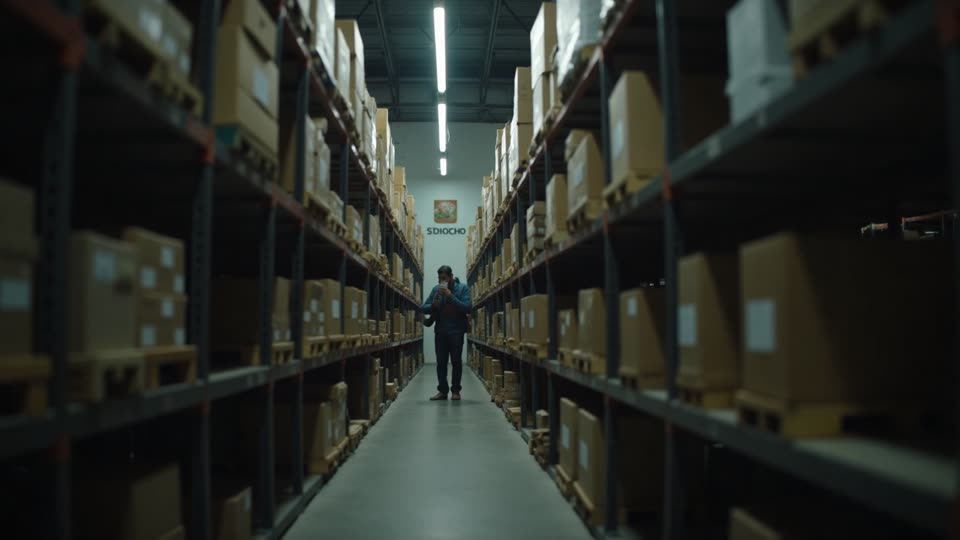
At 20:26, “Two men standing for a three-hour...” — brief: a hospital corridor, low angle across a counter; the date and month were stripped as proper names.
17

The job lifecycle

Submit, poll, download, and survive a bad network.

Generation is asynchronous. The request is submitted, the engine polls the job every 3 seconds until it is completed, failed or cancelled, and gives up after 420 seconds with the cutaway named rather than hanging. A dropped connection or a handshake timeout is the network, not the job, so the transport is retried up to four times with a growing pause; a real refusal from the model still fails at once. The service key is read from the environment or a private key file and is never printed, logged or written into a job.

Anatomy
  • Poll every 3 s
  • Still timeout 420 s
  • Transport retries: 4 attempts, 2 s, 4 s, 6 s apart
  • Submit timeout 90 s; download timeout 180 s
Rules
  • A completed job with no output is a failure, not a success
  • A dry run prints every prompt and calls nothing
  • Each generated clip has a hard cost cap, checked before the call
The 4.9 s still at 3:35 as delivered, with its slow pull back.
18

The fallback

What plays when a still could not be made.

A cutaway that failed the gate, failed the writing check twice, timed out or was refused is recorded with its reason in the generation record. Assembly then looks for a drawn cutaway under the same id and uses it if one exists; otherwise the window simply plays the layout underneath, with the captions. Nothing on screen breaks, and the assembly record lists every substitution, so a build that quietly lost its photographs cannot pass itself off as complete.

Anatomy
  • Generation record: made, failed, reason per cutaway
  • Assembly record: planned kind, what was used, why
Rules
  • Falling back is always better than shipping a bad picture
  • Every substitution is reported
The sober-look still at 19:46 as delivered, with a pan left.
19

Seven more stills from one lecture

The range one brief template produces.

Across the lecture the same template — setting, framing, sentence, cast, look, exclusions — produced twenty-two stills. Under the old office-first rule they were spread across bank counters, workshops, back offices, open offices, hospital corridors, tailoring and printing workshops and grocery counters — workplaces for a philosophy lecture. Under the rule in force since 22 September the same lecture is set in courtyards, on riverbanks, in libraries, homes and village lanes. They are meant to read as one continuous body of footage: the same light, the same colour, the same kind of people, in different rooms.

Anatomy
  • 22 stills in a 22-minute lecture
  • Shortest 3.04 s, longest 7.2 s
  • 117.2 s of screen time, 8.7% of the runtime
Rules
  • Pull two or three from across the lecture side by side: they must read as the same film

Rules

The rules, and the reason for each.

Hard rules are checked by the engine and stop delivery if they fail. Guides steer the choice but can give way when the lecture needs it.

TypeRuleWhy
HardWhere the lecture names a company the library holds, the picture is that company's card: a generated picture of its own world with its name set over it in type, on a translucent panel in its own colour. No logo, ever.A lecture that says Maruti and shows a generic office has wasted the moment it was given — and a generated photograph of a real factory would be a fabrication.
HardA company the script names that the library does not hold gets a card made before the teaching visual is chosen.The card has to exist by the time the picture is picked, or the moment falls back to a generic room.
HardEvery shot of the lecture's own story character is generated from one fixed description — the same woman, the same age, the same dress, throughout.A story with a different stranger in every shot is a story with no face at all.
HardA course with a world of its own keeps to it. The everyday-India settings are only for courses that have none.It is what stops 'sink the family firm' becoming a family home and 'the lesson for Kavita' a school classroom.
HardExclusions are phrased as things that ARE true of the frame — 'any screen in shot is blank and shows nothing at all'.A model with no negative prompt reads 'no charts' as 'charts'. Every film that came back with a dashboard in it was asked politely not to draw one.
HardEvery generated still is read by OCR before it is used, and one carrying words is regenerated once and then dropped.It is the guard that catches a chart on a monitor or writing on a wall, and its absence is silent: a render box without the OCR tool produces films with other people's words on screen and no error anywhere.
HardNothing real is ever generated: no real company, brand, masthead, institution, public figure or named place.A generated photograph of a real thing is a fabrication published under a university's name.
HardNothing that reads as a document, chart, graph, statistic, survey, report, headline or screenshot is generated.A generated chart is a fabricated statistic. Those go to the drawn layer, which draws from the lecture's own numbers or not at all.
HardThe real-entity gate is checked in the planner, re-checked after placement, and checked again immediately before generation.The last check is the last point before anything is spent or made; a rule that runs once can be undone by a later fallback.
HardNo text in frame, ever. OCR checks every still; one stricter retry; then the cutaway is abandoned.Generated lettering is gibberish and a generated screen is a fabricated fact.
HardUnbranded: no logos, lockups, course codes or institution names inside a generated image.The lecture's own transcript often names the institution in its first minute; that name must never reach a brief.
HardOnly windows scoring 4.0 or above may become a generated still.The threshold is what stops a budget being filled with weak moments.
HardA still is asked for only where the sentence names something a camera could be pointed at.Forcing a photograph onto “by the end of these twenty minutes” is how a lecture on human resources ends up illustrated with a field of cows.
HardGenerated cutaways, stills and video together, hold at most 18% of the runtime.Padding a lecture with pictures is a worse defect than running light; the ceiling beats every quota.
GuideTarget two stills a minute; never fewer than one picture a minute of any kind.Generated imagery is what makes a lecture look produced; the floor is about how often the student is shown something.
HardClip length 5 s ideal, 6.5 s maximum.At four to five seconds a cutaway reads as emphasis; at seven or eight the lecture feels stopped.
HardNo cutaway in the first 15 s or the last 25 s.The lecture opens and closes on the lecturer.
HardThe first picture arrives by 90 s, and no stretch longer than 60 s goes without one.An average per minute can hide two minutes of nothing; the gaps themselves are checked.
HardEvery cutaway edge sits on a phrase boundary.A picture arriving mid-word is noticed by everyone.
HardNever over a title, definition or quotation set piece.Those are the moments the animated lecture was written for; a photograph over a definition replaces the best thing on screen with a stranger at a desk.
HardCutaway starts at least 6 s apart, never touching, at most 14 in any 120 s.The base view must return between two pictures, or the cutaways merge into a slideshow.
GuideIndian cast and setting by default, stated in every prompt.Image models default to Western-coded people; a course whose every face is Western tells the student it was not made for them.
GuideBright, natural light by default; the sober look only when the sentence names hardship.The picture should look like the life the course is preparing students for, without prettifying a passage about a layoff.
GuideThe place the sentence names comes first; then the course's own world; never an office by default.A story about a cashier belongs at a counter and a line about a river on a riverbank — and a philosophy lecture should not look like a management one.
HardOnly push, pull and pan moves; no parallax or build-on on a generated still.One flattened photograph has no layers; faking separation by cutting it up shows seams.
GuideStock footage is tried before a still is generated.Real footage is real and costs nothing; every window stock covers removes a generated clip.
GuideOne image model and one look paragraph for the whole lecture.Switching mid-lecture is style drift; twenty stills must read as one film.
HardEvery generated clip has a hard cost cap, checked before the call.The cap is a constraint on what may be requested, not an average across the lecture.
HardNothing is paid for twice: stills are cached by permanent id and reused.A build that dies and restarts should not buy the same pictures again.
HardCaptions run on top of every cutaway, uninterrupted.The word highlight is the thread a student follows; it must not drop at a cut.
HardThe lecture's audio is never touched by a cutaway.This effect changes the picture only.

Settings

Every setting, with its value.

These are the values the engine runs with today. The name in small type is the setting as it appears in the engine, for anyone comparing notes with a producer.

SettingValueWhat it does
Stills per minute, targetIMG_PER_MIN2.0How many generated stills the planner aims for per minute of runtime.
Pictures per minute, floorIMG_FLOOR_MIN1.0The minimum pictures per minute, counting stills, video and drawn together; a hard check.
Ideal clip lengthCLIP_IDEAL5.0 sThe length a cutaway is steered toward.
Maximum clip lengthCLIP_MAX6.5 sThe longest a generated cutaway may be placed by the ordinary passes.
Quality barSCORE_GOOD4.0Minimum candidate score; below it a window is never a generated still.
Generated ceilingAI_HI18% of runtimeTotal screen time stills and generated video may hold together.
Opening clearHEAD_CLEAR15 sNo cutaway before this point.
Closing clearTAIL_CLEAR25 sNo cutaway within this much of the end.
First picture byOPENING_MAX90 sThe first cutaway of any kind must land inside this.
Longest gapMAX_GAP60 sNo stretch between the clear zones may run longer without a picture.
Minimum spacing6 s between starts (3 s only to meet the floor)How close two cutaways may begin.
Density cap14 in any 120 sThe most cutaways any two-minute stretch may carry.
Still sizesSTILL_SIZES2048x1152, then 1920x1088, 1536x864, 1344x768Requested in order until the model accepts one; the accepted size is then used for the whole lecture.
Frame rateFPS30 fpsRate of the moving shot made from each still.
Zoom ceiling1.14 (14%)The furthest the push-in reaches, and where the pull-back starts.
Pan travel280 px at 2200 px wideHow far a pan moves across the still over the window.
CastCASTIndian people who belong in the sceneWho is in frame, stated in every prompt.
Age by career stageAGE3 rulesTwenties, early thirties, or forties and fifties, read from the sentence.
Default lookSTYLEbright, natural light, no place namedThe photographic look used for every still unless hardship is named.
Sober lookSTYLE_HARDdocumentary, harder lightThe alternative look for passages about hardship.
Hardship wordsHARDabout 40 word stemsThe narrow list that switches a still to the sober look.
Setting rotationSETTINGSthe course's world + 18 everyday places, each with its own keywordsScored against the sentence; three anchors per world for a sentence that names nothing.
Named placesPLACEabout 23 keyword rulesA place named in the sentence overrides the course world.
Course worldsWORLDS10 worldsPicked from the course name; management and HR are the only ones that default to workplaces.
Office checkoffice_sharewarn above 1 in 3The dry run counts shots set in an office-like room.
FramingsSHOTS6 camera positionsRotated by cutaway id.
ExclusionsFORBIDfixed clauseNo text, signage, logos, charts, paperwork, posters, watermark, brand or famous person.
Last-moment gatesREAL / DOCLIKEbrands, places; document wordsChecked immediately before any generation.
Writing threshold4 runs of 3+ lettersOCR result that counts as writing in frame.
Job timeout420 s, polled every 3 sHow long a still may take before the engine gives up on it.
Network retriesNET_ERRORS4 attemptsA dropped connection is retried; a real refusal is not.
Per-clip cost capCAP_PER_CLIPfixed ceilingNo still or shot may be requested from a model priced above it.

Checks

What is verified before it ships.

Gate re-checked

Every generated cutaway is confirmed to name no real entity after all fallbacks, and the generator checks again before the call.

No writing in frame

OCR on every still; a second failure abandons the cutaway.

Edges on phrase boundaries

Every cutaway start and end matches a phrase boundary to the hundredth of a second.

No overlaps

No cutaway overlaps another, and each ends before the next begins.

Generated share at most 18%

Stills plus generated video are summed against the runtime; a hard check.

Picture floor

Stills, video and drawn cutaways together reach one per minute; a hard check.

Head and tail clear

No cutaway in the first 15 s or the last 25 s.

First picture by 90 s, no 60 s gap

Gaps are measured between the clear zones; a build that cannot meet them stops and names the stretch.

Every clip within the cost cap

Confirmed per clip before the request.

Clip on disk is real

A file under 10 kB is discarded as a failed leftover, never treated as finished.

Piece length

Every assembled piece is counted frame by frame against its window; a piece more than 2 frames out stops the join.

Substitutions reported

Assembly lists each cutaway that fell back and why.

Style holds across the lecture

Stills from early, middle and late in the lecture are compared side by side for one continuous look, correct casting, and no drift into illustration.

Worked example

In a real lecture

“Indian Wisdom, Philosophy and Traditions”, lecture 1, runs 22 minutes 22 seconds after cleanup. The planner found 157 candidate windows above the 4.0 bar and placed 50 cutaways: 22 generated stills, 9 generated video shots and 19 drawn cutaways. The first still lands at 0:42 on “Moksh, the self, the good life”, over Presenter Centred; the last generated cutaway ends at 21:10, well clear of the 25-second presenter-only close.

At two a minute the still target for this runtime is 45, and the floor is 22 pictures. The floor was met with room to spare (50 pictures in all); the still target was not, because the lecture is a philosophy lecture and much of it names ideas rather than things a camera can see. The planner does not force a photograph onto those passages: they went to the drawn layer or stayed on the base layout. The generated share came to 12.6% of runtime against the 18% ceiling, leaving 72 seconds of headroom.

Stills averaged 5.3 s, from 3.04 s to 7.2 s, and together held 117 seconds, 8.7% of the film. Fourteen of the twenty-two scored exactly on the 4.0 bar and one scored 7.0 (“Atman, the innermost self, Brahman, the ultimate reality behind all things”). Two generated cutaways were switched to the sober look by the lecturer's own words: “poverty” in a video shot at 17:17 and “accident” in a still at 19:46. Because the camera move is keyed to the cutaway's timestamp id, this lecture's stills alternated between the slow pull back and the leftward pan.

22:22Runtime
22 (target 45, floor met)Generated stills
117.2 s, 8.7%Still screen time
12.6% of runtimeAll generated cutaways
0:42First still
12 of 22Over the full animated lecture
2 of 31 generatedSober look used
157Candidates above 4.0

Limits

What it deliberately does not do.

  • It will not generate anything real: a named brand, building, publication, institution or person is never photographed by the image model. Those moments go to stock footage or a drawn cutaway.
  • It will not generate charts, statistics, headlines or documents of any kind.
  • It will not put a photograph on a sentence with nothing a camera could see, however far the lecture is below its still target.
  • It cannot enumerate cleanly. A photograph of four unrelated objects in a row looks staged, so a list becomes one representative scene, or goes to the drawn layer, which can show four things side by side.
  • It cannot do parallax or progressive build-on. One flattened image has no layers.
  • It does not interrupt or change the audio, and does not cover the opening 15 seconds or the closing 25.
  • It does not guarantee a photograph where the model repeatedly draws writing into the frame: after one retry the moment falls back.
  • It does not depict real deaths or real named tragedies; those are withheld by hand.

Works with

How it meets the other effects.

Questions

What educators ask about it.

Are these real photographs?

No. They are AI-generated to a brief written from the lecturer's sentence, and for exactly that reason nothing real is ever depicted: no real brand, place, institution or person. Where a lecture needs a real thing on screen, stock footage or a drawn cutaway is used.

Why are the people always Indian?

Because these lectures are made for Indian universities, and image models default to Western faces unless told otherwise. Where a sentence is about another country, a stock clip or a drawn cutaway is the better source for it.

Could a generated image put our logo or a wrong statistic on screen?

The prompt forbids text, logos and charts, the institution's name is never sent, and every still is read by OCR afterwards. A still that shows writing twice is discarded, not shipped.

Why do some minutes have no photograph?

Because nothing in them can honestly be photographed. The engine keeps one picture a minute across every kind of cutaway, and an abstract stretch gets a drawn cutaway rather than a forced photograph.

Can we change or remove one picture?

Yes. Every still is stored under its own permanent id with its brief, so one cutaway can be regenerated, rewritten by hand or removed without touching the others.

Why do the pictures look so bright and tidy?

On purpose: the default light is bright and the surroundings well kept, because a muted look produced dim, run-down rooms under lectures about good practice. The sober look is used only where the lecturer is actually talking about hardship.

Why are some of the examples offices in a philosophy lecture?

They were made before 22 September 2026, when every picture defaulted to a workplace. Since then the setting comes from the sentence first and then from the course's own world — courtyards, riverbanks, libraries and homes for philosophy — and at most about one picture in three is set in an office-like room.

All effects

Every effect has a page like this one.

See this effect on your own lecture.

Send a recording and we'll run it through the pipeline as a pilot — one free sample per institution.