Engine/Effects/Visual Enhancement

Stock Teaching Visuals

Before anything is generated, the engine looks for real footage that already shows what the lecturer is saying. A clip is used only if it clears five gates, judged on the frames that will actually be cut in, and a near-miss never ships: where nothing genuinely matches, the moment falls to a generated or drawn cutaway instead.

Real footage, five gates, a reject is free

The finished effect

What it looks like when it is done.

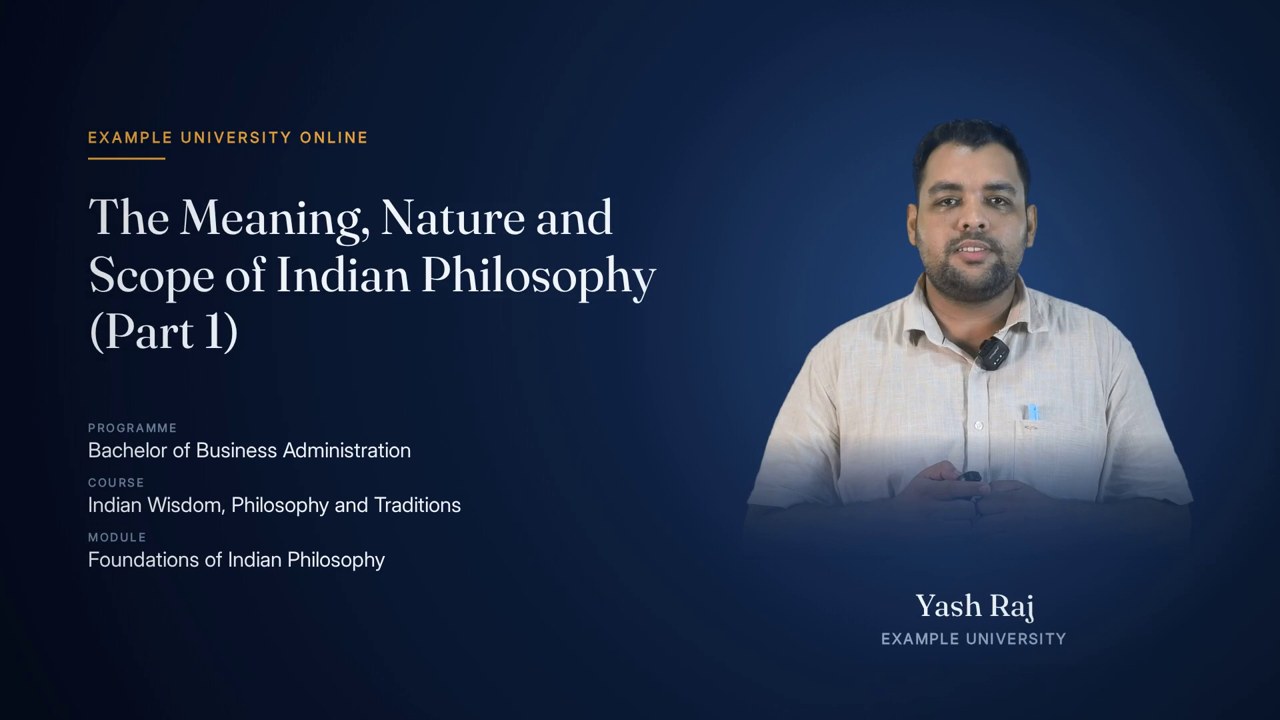
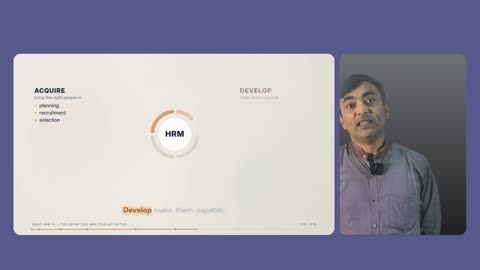
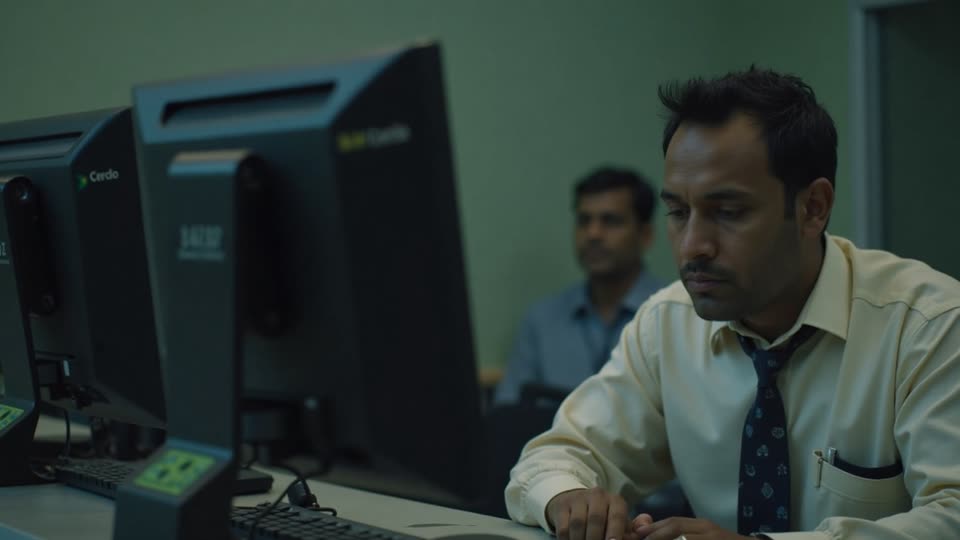
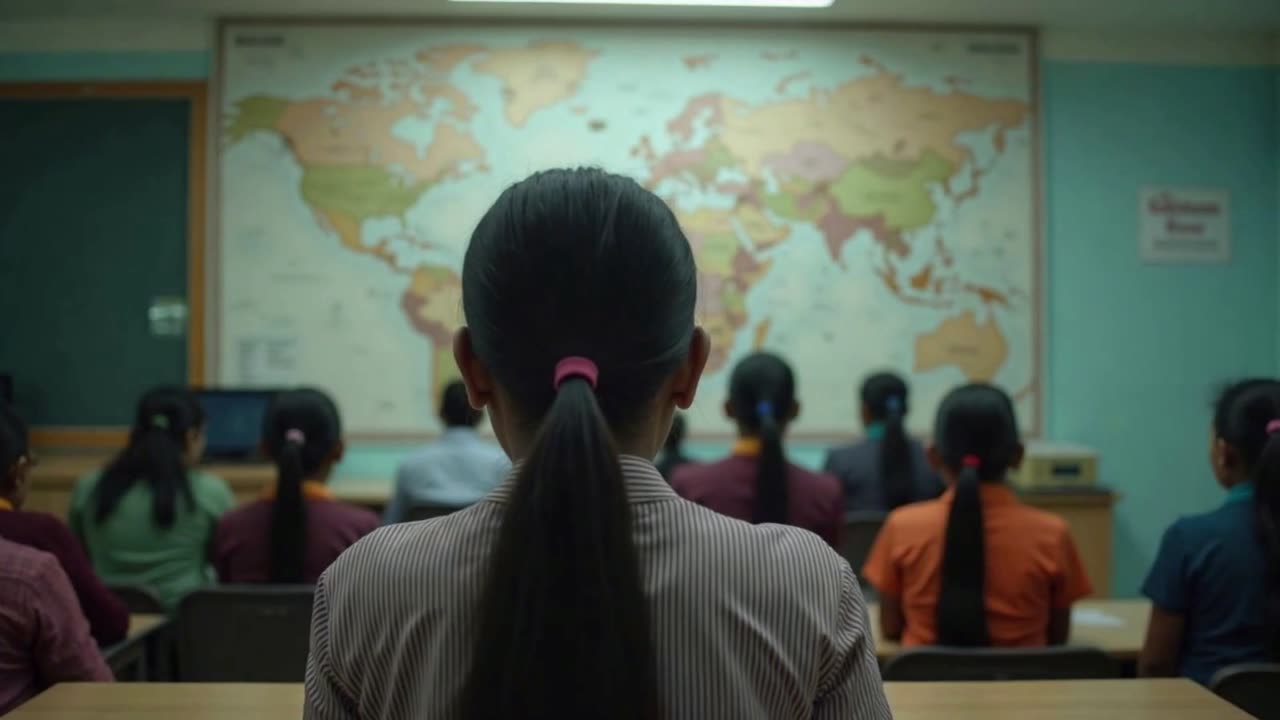
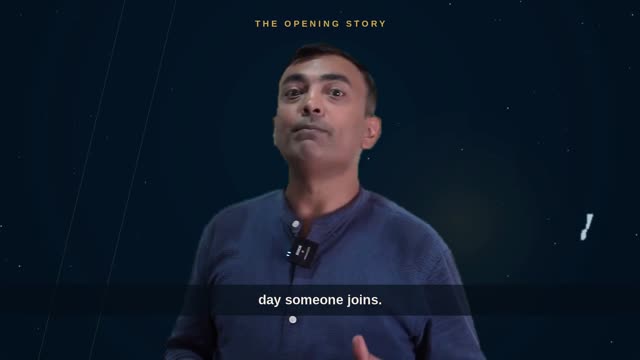
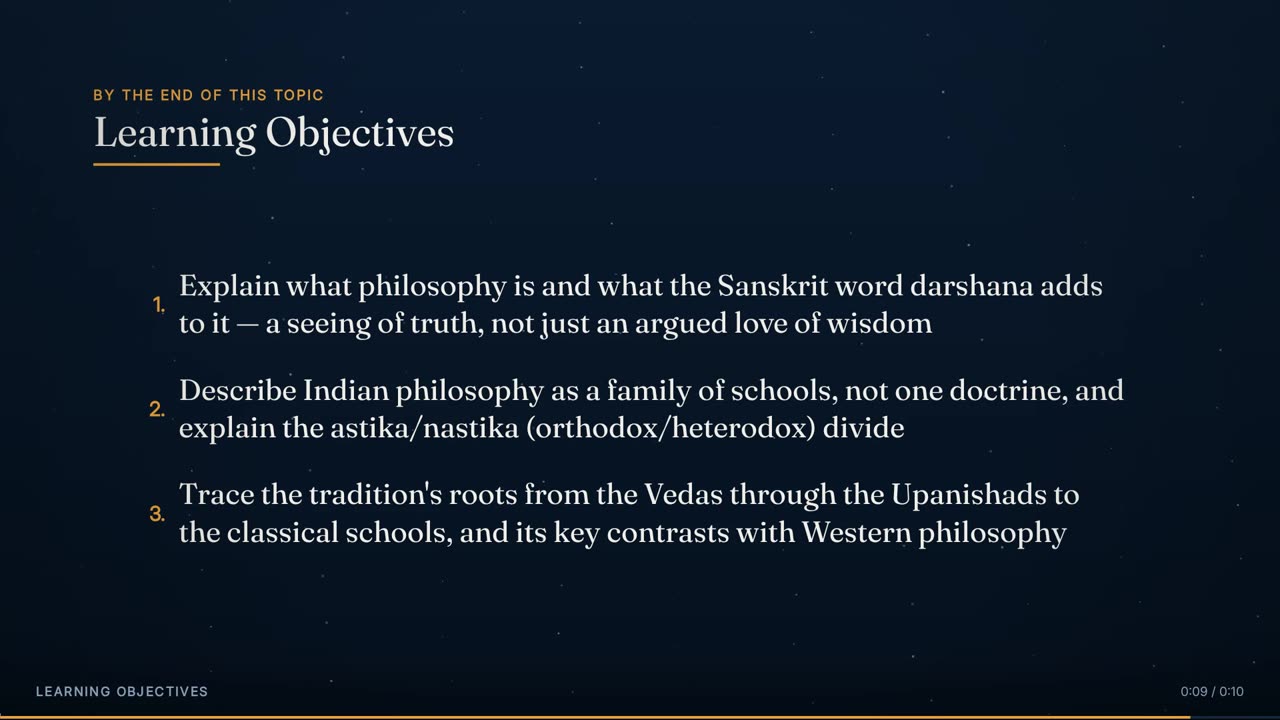
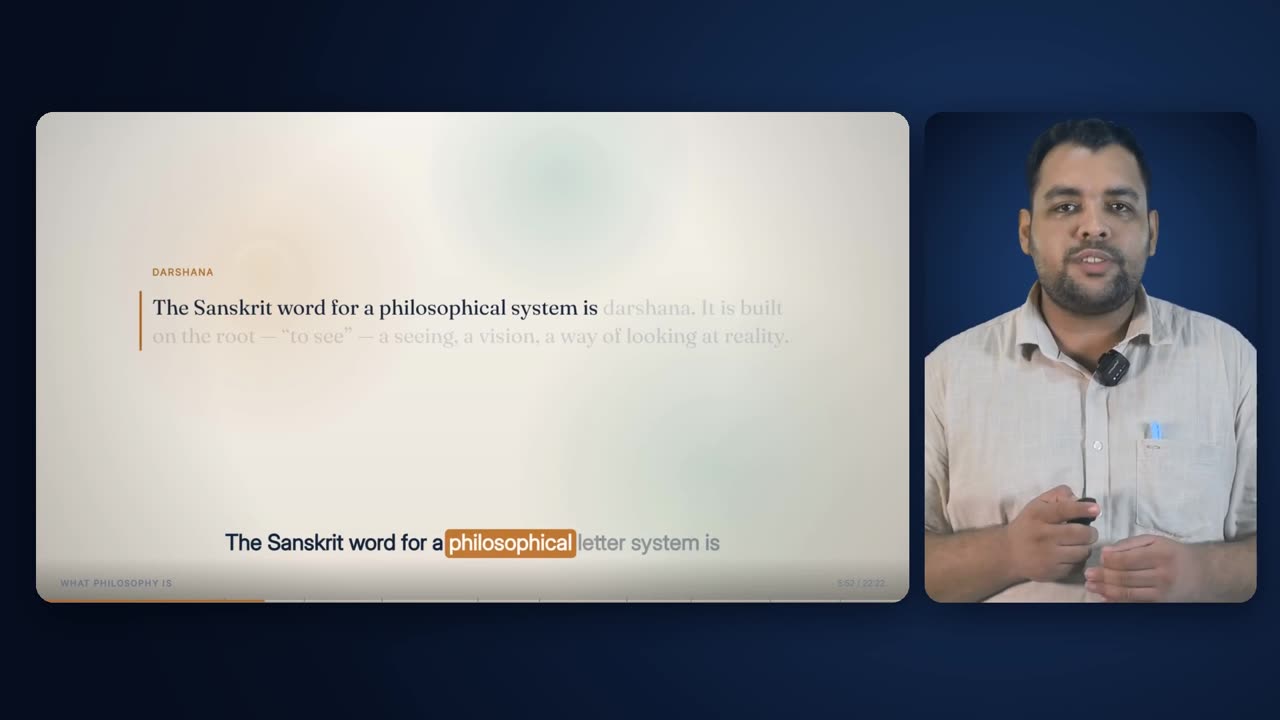
Stock cutaways in a produced lecture: real footage of real places, chosen only where the lecture names something a camera could actually have filmed, captions carried over the top.

16 s · 1920 × 1080 · with sound

Overview

What it is, and why it exists.

Stock Teaching Visuals are real video clips of real people and places, found in licensed stock libraries and cut in full-screen over the phrase they illustrate. They are the first rung of the source ladder for every cutaway that can be photographed: stock first, because it is real and costs nothing; a generated still or shot second; a drawn cutaway last.

The rule that matters most is that relevance is a bar, not a quota. A per-minute cadence is a ceiling, never a target. A wrong picture actively contradicts the narration in a way that no picture never does, so any window where no clip clears the bar keeps its base view, or passes down the ladder, rather than taking a loosely related clip to fill a slot.

The problem stock solves is specific. Some things a lecture mentions are real and should look real: a railway station, a textile mill, a motorcycle assembly line, a government complex. The image and video models are forbidden to depict real places and institutions, because a generated picture of a real thing is a fabrication. A real clip of a real railway station is not — provided no signage, logo or on-screen text survives into the frames used. So a sentence that names a real entity loses the generators but keeps stock.

It depends on the composition plan, which writes a source ladder for every cutaway and marks whether the sentence names anything a camera could point at. The stock search then fills what it can, records exactly where each clip came from, and the plan's source field shows, per cutaway, whether the picture is real footage, generated or drawn.

at most 1 a minute, a ceilingCadence
5, any failure rejectsGates
30–40 per windowCandidate pool
top 5–6Opened for viewing
3–5 inside the 5 s usedFrames judged
8 of 23 windowsMeasured hit rate
about 1 in 3Looked right, was wrong
never below the lecture's ownResolution

How it is made

Step by step, in the order the engine runs it.

Read the source ladder

The composition plan gives every cutaway an ordered list of allowed sources. A document-like sentence gets drawn only. A sentence naming a real entity gets stock, then drawn. A planned still gets stock, image, drawn; a planned shot gets stock, video, drawn; a planned drawing gets stock, drawn. If the sentence names nothing a camera could point at, stock is removed from whichever ladder applies, so the search never runs.

Window the lecture

For a stock pass over a whole lecture, the runtime is divided into consecutive 60-second windows, and in each the single phrase that most clearly names a concrete, depictable moment is chosen, using the same scoring as every cutaway. Connective talk, meta talk about the lecture, and anything naming the institution, instructor or platform are never candidates.

Gate 1: is it depictable?

Before any search, the sentence must name something a camera can point at: a concrete noun, a place, an object, an action. A concept, a definition, a policy process or a citation is not searched at all. Skipping here is the gate working, not failing.

Write the brief, then the query

A visual brief is written first — the core idea, one to three concrete nouns, the relationship — so the later checks have something concrete to check against. From its nouns comes a short literal query of two to four words, in the plainest terms a stock photographer would have tagged the clip with, plus a fallback query that drops the least essential qualifier.

Gate 2: build the pool

Both libraries are searched. Their tags, titles and descriptive page names are used only to assemble a pool of 30 to 40 candidates. Nothing is accepted on metadata.

Gate 3: pre-rank offline

The brief and every candidate's caption and tags are compared by a local image–text matching model, which costs nothing per candidate, and the top 5 or 6 are kept. This is what makes it affordable to look at the best of forty results rather than the first three in tag order. Pre-ranking never accepts a clip either; it only decides what gets opened.

Gate 4: look at the frames you will use

For each surviving candidate the 5-second sub-range that would be cut in is chosen first, from the clip's own motion. Three to five frames are sampled across that range and judged as a set with one closed question in the brief's own words: is this thing visibly present, yes or no? Anything that has to be argued for is a no.

Gate 5: the disqualifier list

A single hit on any line rejects the clip whatever the frames show: on-screen text, a logo or storefront, a watermark, the wrong currency, country or era, a stock cliché, too low a resolution or a portrait crop, a clip already used in the course, or an identifiable person under a sentence about wrongdoing, failure or dispute.

Pick the asset

Video is preferred. The highest rendition at or above the lecture's own resolution is taken and never upscaled. A longer clip is trimmed to the window; a meaningfully shorter one is paired with a merged phrase window or held on its last frame, never visibly looped. If no video survives both queries on both libraries, a photo search is tried and the still is moved with the Pan & Zoom or Floating Glow treatment.

Record everything

Every accepted clip records its library, clip id, page address, the query that found it, the sub-range used and the one-line reason it passed Gate 4. Every rejected one records the gate it died at. Verdicts are cached by library and clip id, and a reuse ledger stops a clip appearing twice in a course.

Cut it in

The clip becomes a silent, fully opaque cutaway shown only during its window. Its own audio is stripped. The caption band, with its legibility plate, is redrawn over it, because real footage has no guaranteed contrast against the ink colour. The source of the cutaway is written into the plan so the build report can show which pictures are real.

Elements

Everything this effect puts on screen, one piece at a time.

Each element below is shown as the engine actually produced it, with its parts, and the rules that govern it.

Minute 1 of the test lecture, on “Relocation, family, hardship, postings” — query “family packing moving house”; a family packing boxes. Accepted with a casting caveat.
01

The one-a-minute ceiling

Cadence is the most stock may do, never what it must do.

A real lecture does not hand over a strong, literally searchable moment every sixty seconds. Recaps, policy checklists and citation-heavy definitions in particular have nothing concrete to search for. So the per-minute cadence is used as a ceiling: at most one stock cutaway per 60-second window, and a window with nothing worth searching for is skipped without running a search at all. There is no point spending a query proving what the transcript already says. The skip is reported with its reason, because a low hit rate is a true finding about the lecture's content and the library's coverage.

Anatomy
  • Consecutive 60 s windows
  • One best phrase per window
  • Skipped windows reported with a reason
Rules
  • Relevance is a bar, not a quota
  • A forced, loosely related clip is worse than no clip
  • Never the institution, instructor or platform
02

Gate 1: depictability

Does the sentence name something a camera can point at?

The first gate runs before any search. If the sentence names only a concept, a definition, a policy process or a citation, it is not searched: nothing in a stock library genuinely depicts “the textbook definition of a transfer”. The composition plan applies the same test when it writes the source ladder, finding a picturable noun by shape — a determiner followed by a noun that is not an abstraction — and removing stock from the ladder where there is none, so the search never runs. Those windows go straight to a generated still or, more often, a drawn cutaway that can carry an idea.

Anatomy
  • Concrete noun, place, object or action: search
  • Concept, definition, policy, citation: skip
  • Applied in the plan as the depictable flag
Rules
  • A skip at Gate 1 is the gate working
  • No search is spent on an abstract sentence
Minute 10, on an operator shifted from a slack line to a busy one in an auto parts plant — query “auto parts factory india assembly line”; an Indian motorcycle assembly line.
03

The literal query

Written for a keyword index, not for a generator.

Stock search is keyword matching against human-written titles and tags, so the query must be different in kind from a generation brief, not merely shorter. It is two to four plain words drawn from the brief's nouns: “bank teller counter”, not “an employee quietly processing a transaction at a regional bank branch”. Narrative queries return nothing; a bare noun like “office” returns too much noise to sift. An enumeration still collapses to one representative scene, because a query can no more search for four things at once than a photograph can show four things without looking staged.

Anatomy
  • 2–4 words
  • Plain tagging vocabulary
  • One representative scene per window
Rules
  • Brief first, then query
  • Never a narrative sentence as a query
Minute 14, on “uprooting a household, finding a home, changing children's schools” — query “family packing moving boxes house”; a family carrying boxes upstairs. Casting caveat.
04

Primary and fallback query

Two tries per window, then the window moves down the ladder.

Each window gets one primary query and one fallback that drops the least essential qualifier, usually the geographic one. If the primary returns nothing usable on either library, the fallback gets one more try. If that also fails, the window is a stock skip and the cutaway falls to the next rung. Two queries is enough to catch a vocabulary miss without turning the search into a fishing trip for anything that shares a word with the sentence.

Anatomy
  • Primary query, both libraries
  • Fallback: least essential qualifier dropped
  • Then: next rung of the ladder
Rules
  • No third query
  • A fallback that finds a near-miss is still a skip
Minute 16, on “The Indian Railways, with well over a million staff, is fundamentally a transferable service” — query “indian railways train station”; an Indian railway station with passing trains.
05

Indian casting as a preference

Searched for, not required.

The generated effects state an Indian cast in every prompt. A search over an existing library cannot do that, so here it is a preference. When the setting is generic — a bank, an office, a factory — an Indian qualifier is added to the primary query and the results are checked. For railways, government buildings and textile or automotive manufacturing, the libraries hold substantial footage genuinely shot in India. For generic offices and family scenes the qualified query routinely returns nothing relevant. The qualifier is never forced onto a universal moment such as a family packing boxes or a job interview, where it only thins an already thin pool.

Anatomy
  • Qualifier added for generic settings
  • Dropped first in the fallback query
  • Never added to universal human moments
Rules
  • The concept being taught outranks the casting
  • Where Indian casting is essential, a generated still or shot is the better source
Minute 20, on “interviews for banking, FMCG, retail, and government roles” — query “young professional interview office”; a résumé reviewed across a desk. Casting caveat.
06

The casting caveat

A strong clip with a Western cast is reported, not silently dropped.

A concretely relevant clip is never rejected solely because the cast is not Indian. It is accepted with a casting caveat recorded against it, and whoever assembles the final cut decides whether a Western-cast clip suits that moment or whether a generated cutaway should replace it to get Indian casting. Silently downgrading a real match to a skip over casting alone would trade one problem, irrelevant content, for another, a duller lecture, without telling anyone the trade was made.

Anatomy
  • Caveat recorded per clip
  • Visible in the build report at a glance
Rules
  • Report the trade-off; never make it silently
  • Casting never overrides relevance in either direction
07

Gates 2 and 3: pool, then pre-rank

Metadata builds a pool; an offline model chooses what to open.

Tags and descriptive page names are useful for exactly one thing: assembling 30 to 40 candidates across both libraries. They are not relevance. “Branch” returns flowering tree branches as often as bank branches, “counter” returns countdown timers, “moving” returns cloud time-lapses. The pool is then ranked offline against the brief by a local image–text matching model and cut to the best 5 or 6, which are the only ones anyone looks at. Neither step accepts a clip.

Anatomy
  • Gate 2: 30–40 candidates from both libraries
  • Gate 3: top 5–6 by local matching, no per-candidate cost
Rules
  • A shared keyword is not relevance
  • Nothing is accepted before Gate 4
Minute 21, on “you will initiate transfers yourself... to grow a promising junior” — query “manager mentoring employee office”; a senior guiding a junior at a desk. Casting caveat.
08

Gate 4: the frames that will be used

Judged on the sub-range, not the thumbnail, with a closed question.

A thumbnail is one frame of a fifteen-second clip, and clips drift: a subject turns to camera, a logo enters at four seconds, there is a hard cut in the middle. So the 5-second sub-range that will be cut in is chosen first, and three to five frames across it are judged together. The question is closed and uses the brief's own words — is a motorcycle-parts assembly line visibly present in these frames, yes or no — not “is this relevant”, which invites “it suggests” and “it could represent”. Those two phrases describe every failed candidate in the measured run. The bar is that a teacher watching would point and say: yes, that is what I just described.

Anatomy
  • Sub-range chosen before judging
  • 3–5 frames across it, judged as a set
  • Closed yes/no question, one line of reason
Rules
  • Right in frame 1 and wrong in frame 4 is a reject, unless the sub-range can be moved and re-sampled
  • Anything that has to be argued for is a no
Minute 8, on moving surplus labour from one department to a shorthanded one — query “factory workers different department”; Indian textile workers. A small uniform logo means the sub-range must keep it out of frame.
09

Gate 5: the disqualifier list

Mechanical rejections, whatever the frames show.

Some failures are not judgment calls and are checked as a list. Any one line rejects the clip. Stock footage is far more likely than generated imagery to carry incidental real-world branding — a storefront, a uniform badge, a sign in the background — so this list is where most otherwise good clips die. A small mark can sometimes be kept out by moving the sub-range or cropping, and the frames are then judged again; if it cannot, the clip is a reject.

Anatomy
  • Any on-screen text in any language: signage, captions, packaging, whiteboards, sticky notes
  • Any brand logo, storefront, uniform mark or identifiable institution branding
  • A watermark, platform overlay or burned-in logo
  • Wrong currency, geography or era for the sentence
  • Stock clichés: a “Start Up” sticky note, laptop-coffee-notebook still lifes, pointing at an unwatched screen, a staged thumbs-up
  • Below the lecture's resolution, or a portrait or square crop
  • A clip already used anywhere in the course
Rules
  • One hit rejects
  • Checked mechanically wherever possible
10

The licence line

No identifiable person under a sentence about wrongdoing.

One disqualifier is a licence term rather than a matter of taste. The stock libraries' licences prohibit portraying identifiable people in a way that is offensive or defamatory, or that implies endorsement. A real, recognisable person shown under a sentence about wrongdoing, failure, dismissal, poor performance, grievance or dispute is exactly that. Such sentences go to the drawn layer without a search. In the measured run they were also the two windows that failed on relevance anyway.

Anatomy
  • Triggers: wrongdoing, failure, dismissal, poor performance, grievance, dispute
  • Route: drawn, no search
Rules
  • A licence term, applied without exception
  • Checked again before delivery
Minute 17, on “lakhs of bank officers, railway staff, and government servants carry a transfer liability” — query “indian government office employees”; a government complex in New Delhi.
11

Real places, not brands

Why stock may show what the generators may not.

The real-entity gate forbids generated imagery of anything real. It does not forbid real footage of it. A generated image of a national railway or a parliament complex would be a fabricated depiction of something that exists; a real clip of a real station is simply true. So a sentence that names a real entity keeps stock on its ladder and loses the image and video rungs. In practice the disqualifier list keeps brands out — any logo, sign or mark rejects the clip — and lets places and infrastructure through.

Anatomy
  • Real entity named: ladder is stock, then drawn
  • Document-like sentence: drawn only, stock too
  • Brand marks still die at Gate 5
Rules
  • No generated imagery of real things, ever
  • Real footage of real places is allowed if it carries no signage or logo
12

The asset itself

Resolution, length and the still fallback.

Video is preferred. Both libraries offer several renditions of each clip; the highest at or above the lecture's own output resolution is taken, and a smaller one is never upscaled to fill the frame. A clip longer than the window is trimmed to it. One meaningfully shorter is held on its last frame for the remainder, or paired with a merged window of two short phrases, rather than visibly looped. If no video survives, a relevant photograph is animated locally with the Pan & Zoom or Floating Glow treatment: a relevant still beats an irrelevant video.

Anatomy
  • Rendition at or above 1920 x 1080
  • Landscape only
  • Trim to the window
  • Photo fallback animated locally
Rules
  • Never upscale
  • Never a visible loop
  • Audio always stripped
13

The record

Where every cutaway came from, and why.

Every accepted clip records its library, clip id, page address, query, the sub-range used and the one-line Gate 4 reason. Every rejected candidate records the gate it died at. Verdicts are cached by library and clip id, so across a twelve-lecture course neither the search nor the frame check is paid for twice, and a reuse ledger guarantees no clip appears twice. The plan's source field then says, per cutaway, stock, image, video or drawn, and the build report shows it, so the person receiving the lecture can see which pictures are real footage.

Anatomy
  • source: stock, image, video or drawn
  • source reference: library, clip id, page address, sub-range
  • Verdict cache and reuse ledger
Rules
  • No clip twice in a course
  • Every cutaway's source is visible in the report

Rules

The rules, and the reason for each.

Hard rules are checked by the engine and stop delivery if they fail. Guides steer the choice but can give way when the lecture needs it.

TypeRuleWhy
HardA clip is matched to the setting the engine chose for the shot, never to the lecturer's sentence.The sentence is full of metaphor. Matching it word by word earned a classroom for 'the lesson for Kavita', a city bus for 'the passenger vehicle business' and a shop counter for 'buy-in from her plant heads'.
HardA clip is used only where the catalogue entry is the same SHOT as the setting, not merely a word in common.A boardroom with a city view shares 'city' with a busy street, and a busy street is not that boardroom.
HardFree stock covers places — a meeting room, a robot arm on a line, a port, a branch counter, a platform. Abstractions are made instead.The libraries' versions of deliberation, judgement and teamwork are hands stacked in a circle and a team high-fiving round a laptop. They make a film cheaper, not richer.
HardKinds whose whole subject is writing — a whiteboard, a notebook, sticky notes, a signed document — are never used.They are the brightest clips in the library and every one of them carries somebody else's legible words.
HardA window that names a company belongs to that company's card, whatever the catalogue thinks of the other words in the sentence.'The head of Tata Motors, the passenger vehicle business' matched a city bus on the word passenger — and Tata Motors has a card.
GuideAt most three clips of any one kind per film, spread across the runtime, and the extra search terms ask for Indian footage wherever a kind will carry an Indian lecture.Five shots of the same hand at a whiteboard reads as a library being emptied; and western stock beside deliberately Indian generated teaching visuals read as two different films.
HardRelevance is a bar, not a quota: at most one stock cutaway a minute, never a forced one.A wrong picture contradicts the narration; no picture never does.
GuideStock is tried before any image or video is generated.It is real and it costs nothing; every window it covers removes a generated clip.
HardNo search for a sentence with nothing a camera can point at.Gate 1: spending a search to prove what the transcript already says is waste.
HardDocument-like sentences are never stock.Real footage of a chart or headline carries on-screen text, which the unbranded rule forbids.
HardNever the institution, instructor, platform or course code in a query.Excluded before a query is ever written.
GuideQueries are 2–4 literal words, with one fallback that drops the least essential qualifier.Stock search is keyword matching; narrative queries return nothing and bare nouns return noise.
HardMetadata and pre-ranking never accept a clip.A shared keyword is not relevance.
HardJudge 3–5 frames from the 5 s sub-range actually used, never the thumbnail.Clips drift: logos enter, subjects turn, hard cuts happen.
HardAsk a closed yes/no question about what is visibly present; anything argued for is a no.“It suggests” and “it could represent” describe every failed candidate in the measured run.
HardNo on-screen text in any language.The film is unbranded and text in footage is uncontrolled content.
HardNo logo, storefront, uniform mark or identifiable institution branding.Stock carries incidental branding far more often than generated imagery.
HardNo watermark or platform overlay.Another source's mark on a university's film.
HardNo wrong currency, geography or era.US dollar bills under a sentence about India teach the wrong thing.
HardNo stock clichés.Staged thumbs-ups and sticky notes read as filler.
HardNever below the lecture's resolution, never portrait or square, never upscaled.Softness in a cutaway reads as the whole lecture being low quality.
HardNo clip twice in a course.A reuse ledger keyed by library and clip id.
HardNo identifiable person under a sentence about wrongdoing, failure, dismissal, poor performance, grievance or dispute.A licence term: the libraries prohibit defamatory or endorsing portrayals of identifiable people.
GuideIndian casting is a search preference, not a filter; a strong Western-cast match is kept with a caveat.Silently downgrading a real match trades irrelevance for dullness without telling anyone.
HardReal entities keep stock on the ladder and lose the generators.A real clip of a real place is true; a generated one is a fabrication.
GuidePrefer video; fall back to an animated photograph before leaving a window unfilled.A relevant still beats an irrelevant video.
HardTrim to fit; never loop visibly.A loop seam is as noticeable as a mid-word cut.
HardStrip the clip's audio.The narration is the only sound under a cutaway.
HardRecord source, clip id, page address, query, sub-range and reason for every clip; the gate for every rejection.It makes a swap possible and lets the report show where every picture came from.
HardCutaway edges on phrase boundaries, clear of the first 15 s and last 25 s, captions on top.The same placement rules as every cutaway.

Settings

Every setting, with its value.

These are the values the engine runs with today. The name in small type is the setting as it appears in the engine, for anyone comparing notes with a producer.

SettingValueWhat it does
Cadence ceiling1 per 60 s windowThe most stock cutaways a minute may carry; never a target.
Query length2–4 wordsLiteral tagging vocabulary.
Queries per window2 (primary + fallback)The fallback drops the least essential qualifier.
Candidate pool30–40Assembled from both libraries' metadata at Gate 2.
Opened for viewingtop 5–6Kept by the offline pre-rank at Gate 3.
Sub-range5 sThe part of the clip that will be cut in, chosen before judging.
Frames judged3–5Sampled across the sub-range and judged as a set.
Minimum resolutionthe lecture's own, 1920 x 1080Highest rendition at or above it; never upscaled.
Orientationlandscape onlyPortrait or square crops are disqualified.
Source laddersource_ladderstock firstWritten by the plan per cutaway: stock, then image or video, then drawn.
Depictabledepictabletrue / falseGate 1 in the plan; false removes stock from the ladder.
Sourcesourcestock | image | video | drawnWhat was actually used, filled in once the search has run.
Source referencesource_reflibrary, clip id, page, sub-rangeWhere a stock clip came from.
Clip lengthCLIP_IDEAL / CLIP_MAX5.0 s / 6.5 sThe same window lengths as every cutaway.
Opening and closing clearHEAD_CLEAR / TAIL_CLEAR15 s / 25 sNo cutaway of any source in these stretches.
Quality barSCORE_GOOD4.0The candidate score a window needs before it is a cutaway at all.
Verdict cacheby library and clip idA clip is never searched for or judged twice in a course.
Reuse ledgercourse-wideNo clip appears twice.

Checks

What is verified before it ships.

All five gates cleared

A clip chosen on tags alone, or judged from a thumbnail rather than frames inside its sub-range, is not verified and does not ship.

Disqualifier list clean

No accepted clip trips any line, checked mechanically where possible.

Licence line

No identifiable person under a sentence about wrongdoing, failure or dispute.

Reuse ledger

No clip id appears twice in the course.

No branding

No visible logo, storefront signage or institution branding in the frames used.

Casting caveats recorded

Every Western-cast match is marked so a reviewer can see the trade-off at a glance.

Hit rate by gate

Every window is reported: skipped at Gate 1, searched with no survivor at Gate 4, or rejected at Gate 5 with the line it tripped.

Source written to the plan

Every cutaway carries stock, image, video or drawn, with library and clip id for stock.

Silent and frame-accurate

Clip audio stripped; every assembled piece frame-counted against its window.

Worked example

In a real lecture

The method was measured on a full 22:58 lecture on employee transfers, built around a running case study of a regional HR coordinator at a fictional bank. The runtime was divided into 23 one-minute windows and each was taken through the method, with both libraries searched live.

Eight of the 23 windows (35%) got a real, verified clip. Four were skipped at Gate 1 before any search: a textbook definition with author citations, abstract policy-process language, an HR policy checklist, and the closing recap. The other eleven were searched on both libraries and came up empty. About a third of the candidates that looked right from their tags or page names were wrong once actually viewed: US dollar bills under a line about India, a blurred startup hallway with no content in it, a casual creative-agency huddle standing in for a formal grievance committee, and a computer-literacy class for seniors standing in for workplace mentoring.

Four of the eight winners were Indian-shot — a textile factory, a motorcycle assembly line, a railway station and a government complex in New Delhi — and four were strong conceptual matches on Western-cast footage, accepted with a casting caveat. The libraries are deep for Indian railways, manufacturing and public architecture and thin for Indian offices and homes, which is where a generated still or shot is the better source.

That test used a thumbnail check. The five-gate method on this page was written from its results: frames are now judged inside the sub-range actually used, and a mark such as the small uniform logo in the minute-8 clip must be kept out of that sub-range or the clip is rejected. In the 22-minute philosophy lecture used elsewhere on this site, the composition plan marked 47 of its 50 cutaways as stock-eligible; the other three named nothing a camera could point at and were drawn only.

23 one-minute windowsWindows
8 (35%)Clips accepted
4Skipped at Gate 1
11Searched, nothing survived
about 1 in 3Looked right, was wrong
4 of 8Indian-shot winners
4 of 8Casting caveats

Limits

What it deliberately does not do.

  • It will not fill a minute for the sake of the cadence; a low hit rate is reported, not hidden.
  • It cannot guarantee Indian casting. The libraries are thin for Indian offices and homes; those moments are better generated.
  • It will not use footage with any legible text, logo, storefront, uniform mark or watermark in the frames used.
  • It will not show an identifiable person under a sentence about wrongdoing, failure, dismissal or dispute.
  • It cannot depict abstractions, definitions, policies or citations, and does not search for them.
  • It does not upscale, loop or speed-change a clip to make it fit.
  • It never carries the clip's own sound.

Works with

How it meets the other effects.

Questions

What educators ask about it.

Is stock footage really free to use in a commercial course?

The libraries used allow commercial use without attribution. Every clip's page address is still recorded, so it can be re-checked or swapped later.

Why not just use stock everywhere and skip generation?

Because it does not reach far enough. In the measured lecture 8 of 23 minutes had a clip that genuinely showed what was said. The rest fall to generated or drawn cutaways rather than to a near-miss.

Why are some of the people in stock clips not Indian?

The libraries are Western-skewed for offices and homes. A strong match is kept with a casting caveat so you can choose to replace it with a generated cutaway with Indian casting.

Could a stock clip show another company's logo?

Not if it ships. Any logo, sign, storefront, uniform mark or watermark in the frames used rejects the clip.

How do we know which pictures are real?

Every cutaway's source — stock, image, video or drawn — is written into the plan and shown in the build report, with the library and clip id for stock.

All effects

Every effect has a page like this one.

See this effect on your own lecture.

Send a recording and we'll run it through the pipeline as a pilot — one free sample per institution.