Engine/Effects/Branding

Intro and Outro

Every lecture opens on a five-second welcome card and closes with a five-second end note, each with its own short music cue. Both are built from the course sheet, drawn by the same renderer as the lecture on the same stage, and timed as fractions of their length, so a playlist of lectures from different rooms and presenters opens and closes the same way every time.

welcome 5s · end note 5s · music, no voice

The finished effect

What it looks like when it is done.

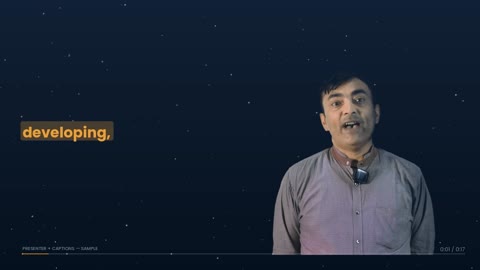
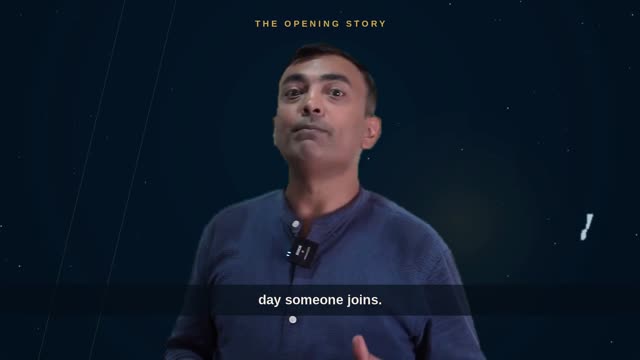
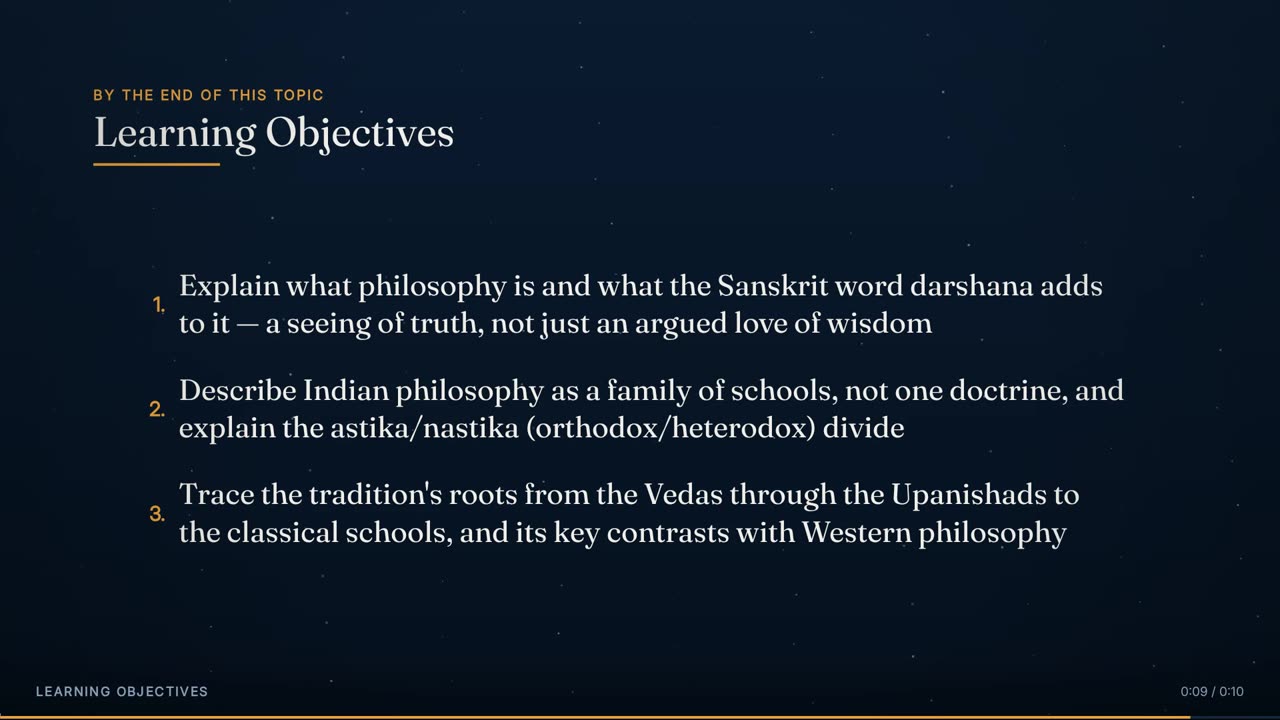
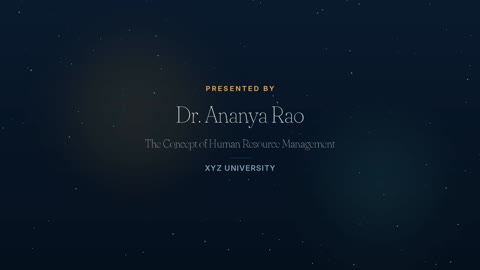
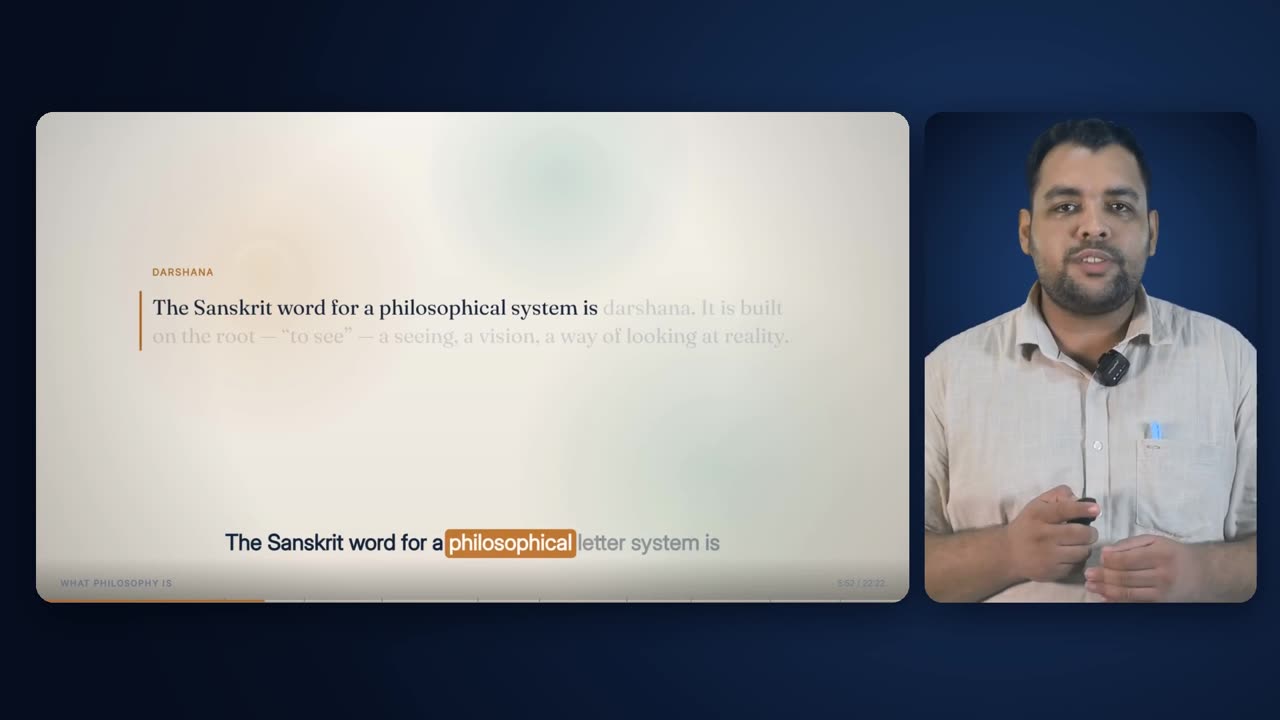
The first 24 seconds of the 22-minute Indian Wisdom lecture used throughout this page, as delivered: the welcome card, the learning objectives, and the moment the lecture itself begins. Music only under the cards; the presenter's voice begins with the lecture.

24 s · 1920 × 1080 · with sound

Overview

What it is, and why it exists.

A lecture recorded in a studio starts mid-thought and ends on a last sentence. Played in sequence on a course page, that reads as clips rather than a course. The intro and outro give each film a front door and a closing frame: the welcome names the institution, the topic and where it sits in the programme, and introduces the presenter; the end note thanks the student and repeats the course, module and topic.

They are two of four framing pieces. The finished film runs welcome (5 s), learning objectives (10 s), the lecture, end note (5 s), key takeaways (10 s). The objectives and takeaways have their own page; this page covers the two cards that open and close with music. All four are rendered, sound-tracked and checked separately, then joined to the lecture in that order.

They are short on purpose. In one earlier programme the first 134 seconds contained three separate statements of what the student was about to learn, and the strongest line of the lecture arrived at 1:08, past the point where roughly a third of viewers who leave a lecture video have already left. So the welcome takes five seconds, carries no narration by default, and gets out of the way.

Nothing on them is typed twice. The institution, online programme name, programme, course, module, topic and presenter are read from the lecture's row in the course sheet. If the presenter's name is not settled, the cards leave the name line off rather than print the wrong one.

5.0 sWelcome
5.0 sEnd note
Welcome · objectives · lecture · end note · takeawaysRunning order
Music only by defaultSound
−20 LUFS integrated, −1.5 dBTPMusic level
by 2.25 s, then heldFully assembled
1920×1080, 30 fpsFrame
0.35 s against the sum of partsJoin tolerance

How it is made

Step by step, in the order the engine runs it.

Read the course sheet row

The welcome and end note take the institution, its online name, programme, course, module, topic and presenter from the lecture's metadata, which comes from the course sheet row for this recording. If that metadata is missing, the build stops: a title card cannot be guessed.

Write the card copy

Welcome: kicker is the online programme name in capitals; title is the topic; three labelled rows give PROGRAMME, COURSE and MODULE. End note: kicker END OF TOPIC; title 'Thank you for watching.'; rows give COURSE, MODULE and TOPIC. Both cards show the presenter's cut-out portrait with the name and institution beneath it.

Plan the beats as fractions of the length

Each card has a length, 5 seconds by default, and one beat unit equals the length divided by five, so the layout survives being lengthened or shortened. The kicker arrives at 0.10 beats, the portrait at 0.40, the title at 0.55, the three rows at 0.95, 1.25 and 1.55, and the name at 1.75. At the default length that is 0.10 s, 0.40 s, 0.55 s, 0.95 s, 1.25 s, 1.55 s and 1.75 s.

Assemble in the first half, hold for the rest

Each item fades and rises into place over half a second or so (the kicker 0.5 s, the title 0.6 s, each row 0.5 s, the portrait 0.7 s, the name 0.5 s). Everything is on screen by about 2.25 s, and the remaining 2.75 s is time to read it. A card still arriving when it cuts away reads as a glitch.

Cut the music cue

Each card gets a music cue the length of the card. With no track supplied, the engine synthesises one: four chords (F, B flat, F over C, F) spread evenly across the card, a pad of three slightly detuned voices rounded off with a gentle low-pass, a soft bass under each chord, and a rising eight-note bell figure over the top that settles on the home note. Where the institution supplies a music track, the cue is instead cut from it, starting on a measured bar line.

Level the sound

The cue is high-passed at 72 Hz to take out rumble that turns to buzz on laptop speakers, given a short stereo room (34% wet, 1.9 s tail), peak-normalised, and then loudness-normalised to −20 LUFS integrated with a −1.5 dBTP ceiling. Music alone is levelled lower than speech, because at a spoken level a music bed with nothing over it would be the loudest thing in the lecture.

Render with the lecture's own renderer

The card is drawn frame by frame at 30 fps by the same renderer, fonts and template style as the animated lecture, in a card mode that paints the presenter's stage ground and a soft vignette and omits the lecture's progress bar and clock. The presenter's portrait is decoded before the first frame, so no frame can be drawn without it.

Mux picture and sound

The silent render and the levelled cue are combined into one piece with the picture copied and the sound encoded at 192 kb/s.

Join the film

The four framing pieces and the lecture are checked for identical frame size, pixel format and frame rate, since joining mismatched pieces would reframe one. Each is normalised to the same stereo 48 kHz sound and the same timebase with its picture copied untouched, then they are joined. The joined film's length must be within 0.35 s of the sum of its parts or the build stops.

Mark and deliver

The institution's logo is burned over the joined film, cards included, and the final check traces the film's sound back to the lecture's cut audio at the offset the welcome and objectives create.

Elements

Everything this effect puts on screen, one piece at a time.

Each element below is shown as the engine actually produced it, in the real lecture, with its parts, and the rules that govern it.

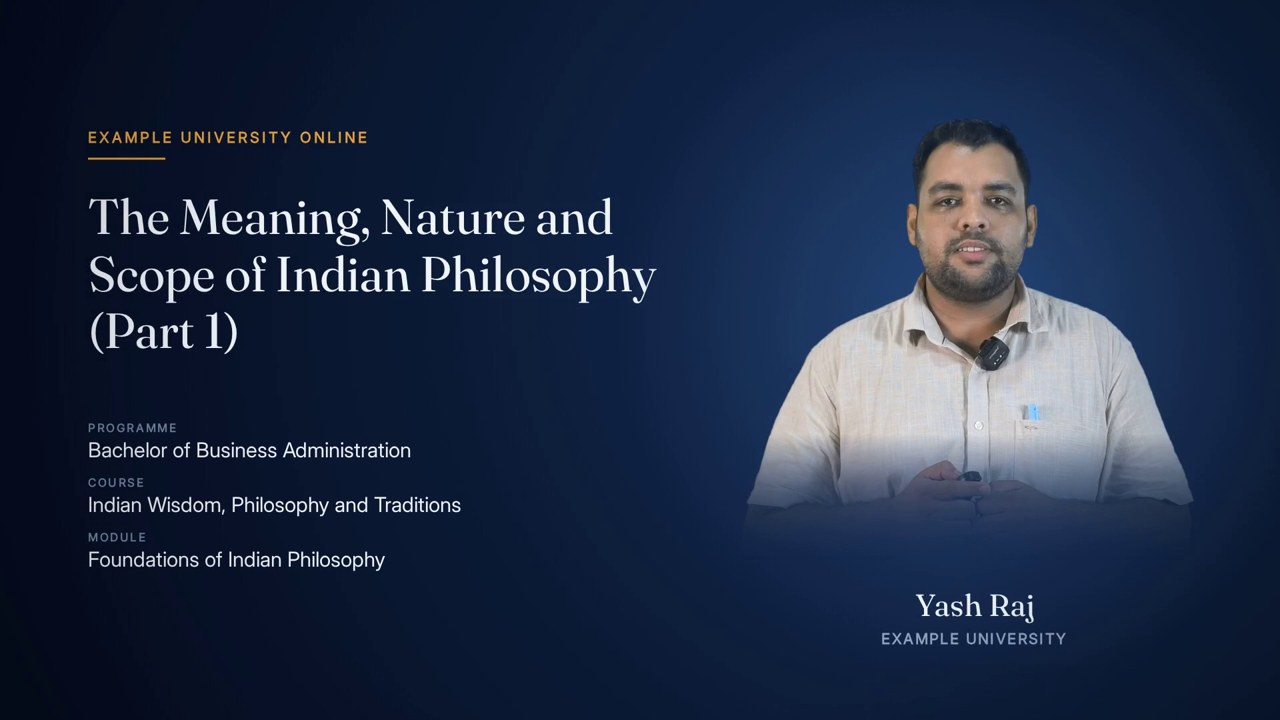
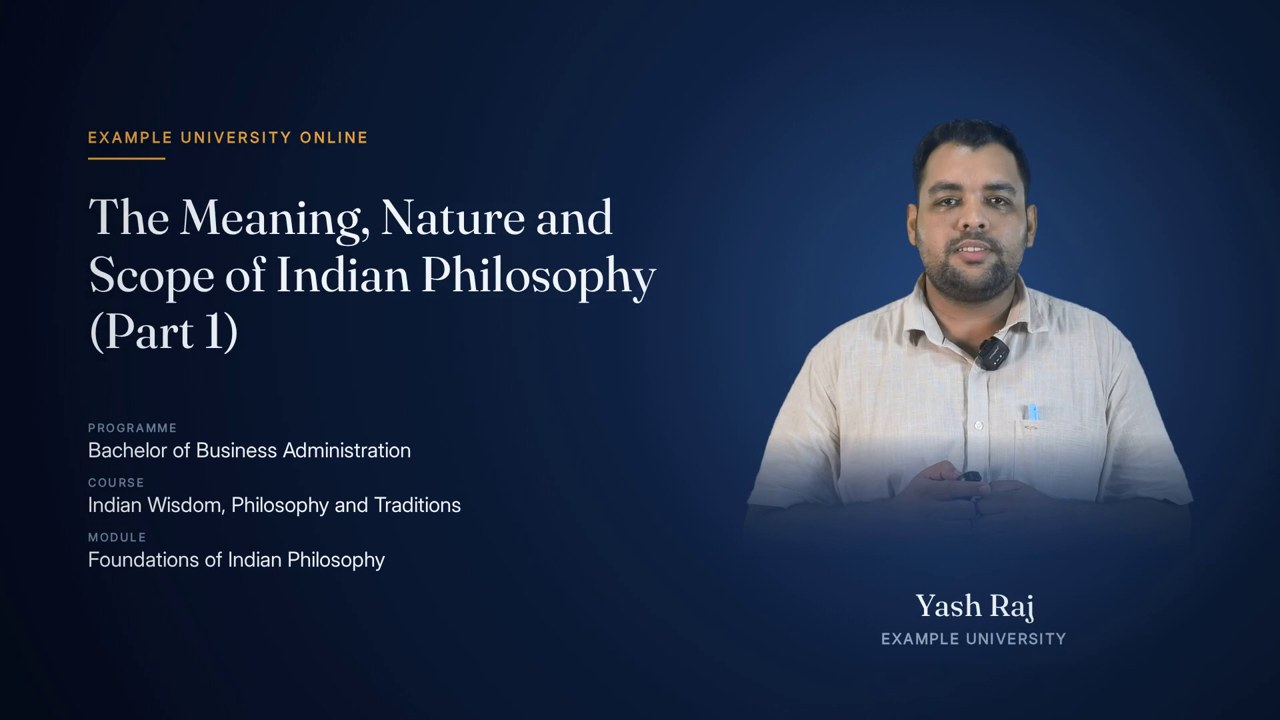
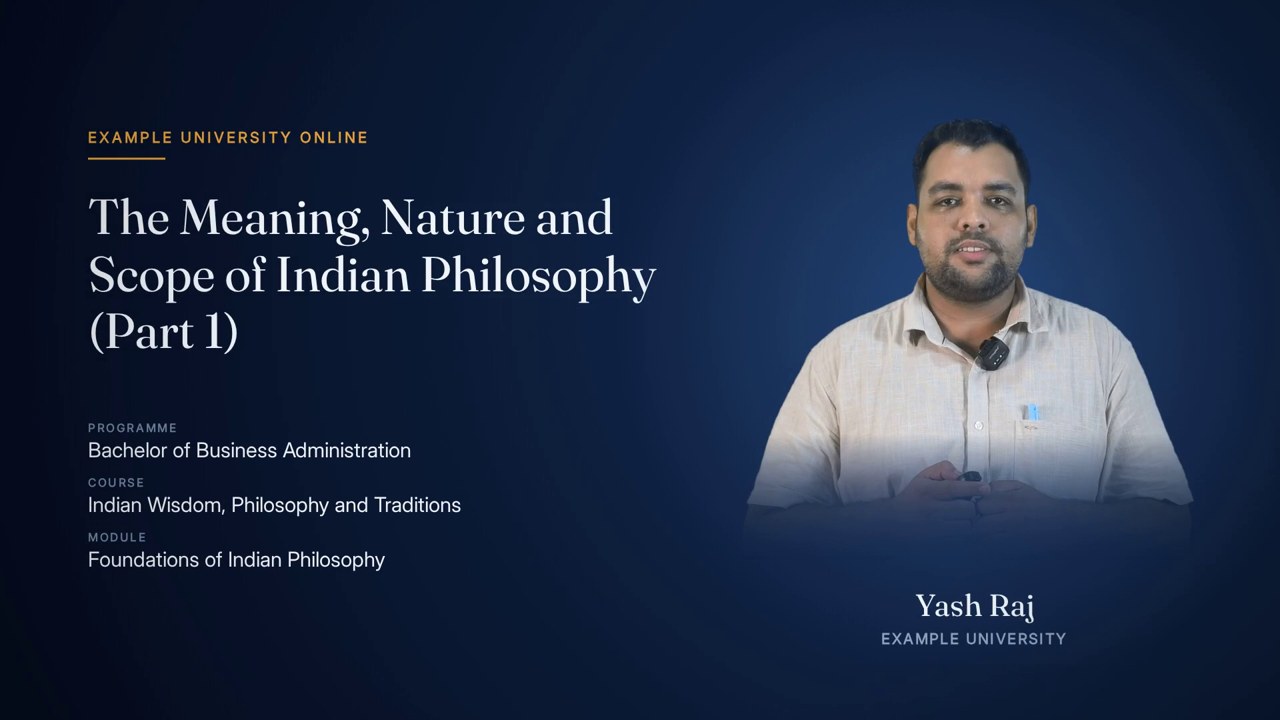
The welcome card at 2.5 s, fully assembled: programme, topic, three rows, portrait and name.
01

The welcome card

The film's first five seconds.

The welcome is a title card on the presenter's stage. Down the left, under the online programme's name, sits the topic in the style's display face, and beneath it three labelled rows place the lecture in its programme, course and module. On the right is the presenter, cut out of their own recording, with their name and institution beneath. It says, in the order a student needs it, whose course this is, what today's topic is, where it sits, and who is teaching it.

Anatomy
  • Kicker: online programme name, capitals, amber #E8A03A, at (132, 214) with a 116 px amber rule
  • Title: the topic, display face up to 74 px, from y 292, width 950 px
  • Rows from y 648, 82 px apart: small grey label, 31 px value
  • Portrait 690 px tall, centred at x 1462, standing on y 858
  • Name 46 px at y 924; institution in capitals at y 966
Rules
  • All copy comes from the course sheet; nothing is typed twice
  • No presenter name if the byline is not settled
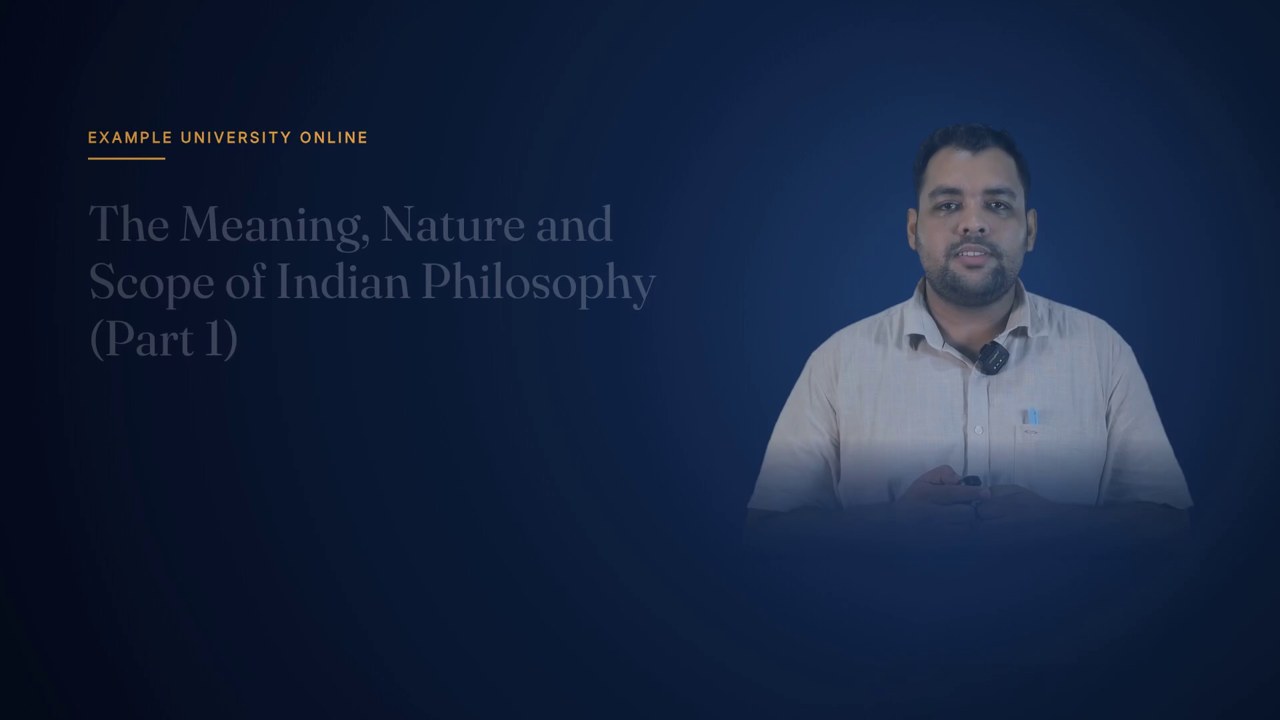
The welcome at 0.6 s: the programme name is in, the portrait and title are arriving.
02

The arrival

How the welcome assembles itself.

Nothing on the card is simply switched on. Each piece fades in and lifts a few pixels into place on a fixed clock, left column first and the name last. The portrait belongs to the card's furniture and arrives early with it; the name waits until the rest has landed, so the eye moves from what to who. The order is the same on every lecture, which is what makes a course feel produced.

Anatomy
  • 0.10 s kicker, 0.40 s portrait, 0.55 s title
  • 0.95 s, 1.25 s, 1.55 s the three rows
  • 1.75 s name and institution
  • Rises: title 14 px, rows 8 px, portrait 18 px
Rules
  • Timings are fractions of the card's length, not fixed seconds
  • Name arrives last
The welcome at 4.4 s, held just before the cut to the learning objectives.
03

The hold

Time to read.

From about 2.25 s to the cut at 5.0 s the welcome is simply held. Nothing moves except the ground's gentle light. The hold is not padding: a student reading a topic of ten words, three rows and a name needs roughly that long, and a card that is still animating when it cuts away looks broken.

Anatomy
  • Everything on screen by about 2.25 s
  • About 2.75 s of still hold
  • Cut straight to the learning objectives
Rules
  • Assembly finishes a little past the halfway mark
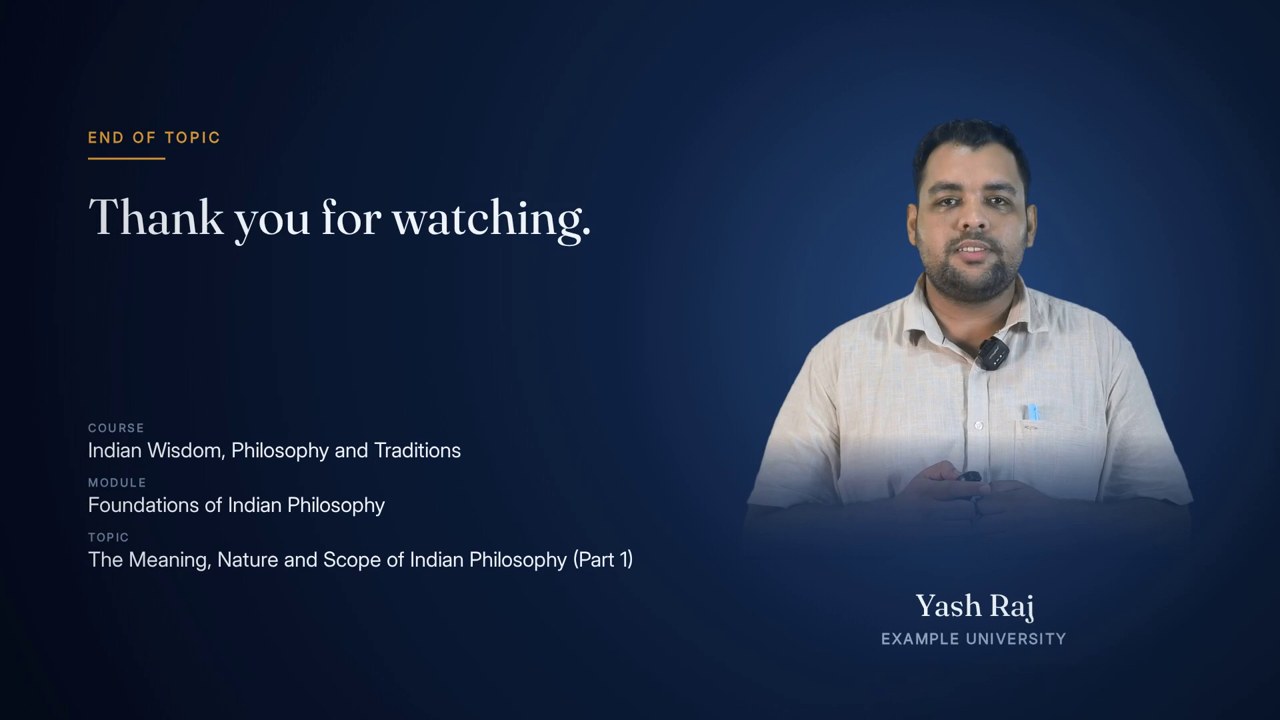
The end note at 2.5 s, fully assembled.
04

The end-note card

The close of the lecture.

The end note mirrors the welcome with a different job: to mark the end of the teaching and name exactly what was just watched. The kicker reads END OF TOPIC, the title 'Thank you for watching.', and the rows give the course, module and topic, so a student who reaches the end of a playlist item knows precisely where they are. The presenter returns on the right with their name, closing the film on the person who taught it.

Anatomy
  • Kicker: END OF TOPIC
  • Title: Thank you for watching.
  • Rows: COURSE, MODULE, TOPIC
  • Same portrait, name and geometry as the welcome
Rules
  • Comes immediately after the lecture, before the key takeaways
  • Same stage and same layout as the welcome
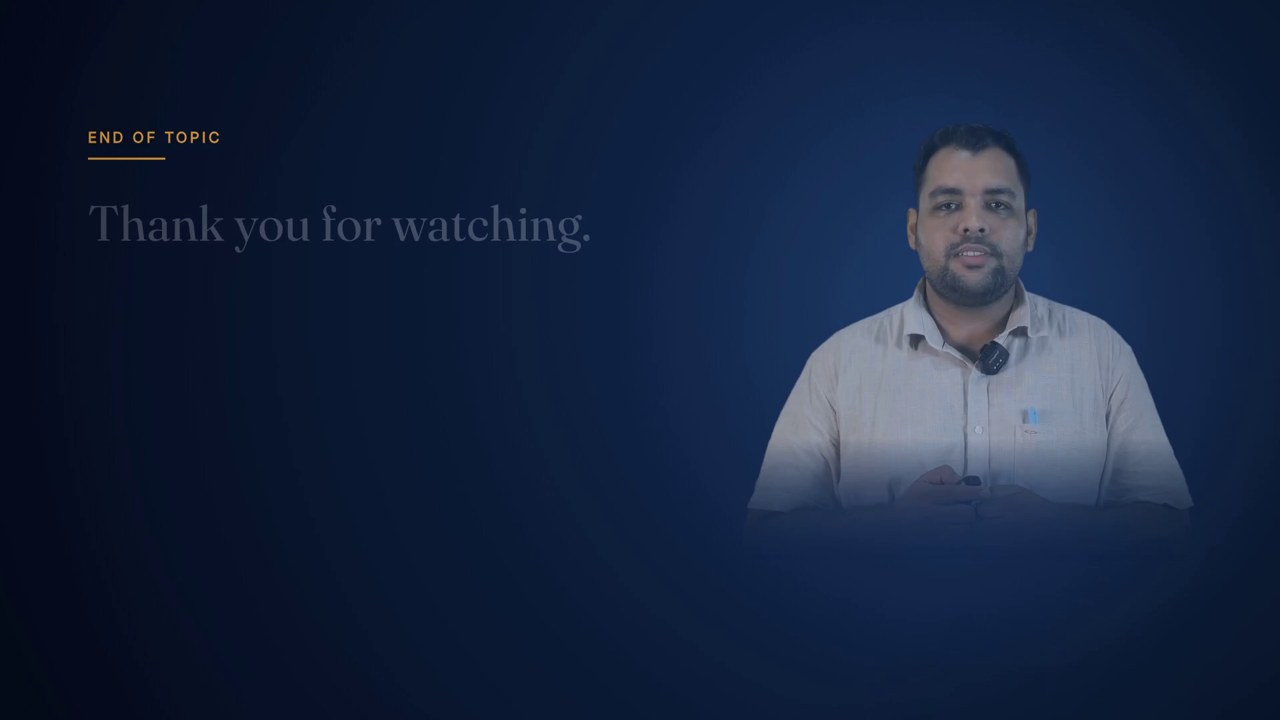
The end note at 0.6 s, the kicker in and the rest arriving.
05

End-note arrival

The same clock, closing.

The end note runs on exactly the same beat plan as the welcome, so opening and closing feel like a pair. Because the lecture has just ended, the card appears over a clean cut rather than a transition, and the kicker lands a tenth of a second in to show that the frame is a new, deliberate one.

Anatomy
  • Same beat fractions as the welcome
  • Kicker at 0.10 s, name at 1.75 s
Rules
  • No cross-fade from the lecture; a clean cut
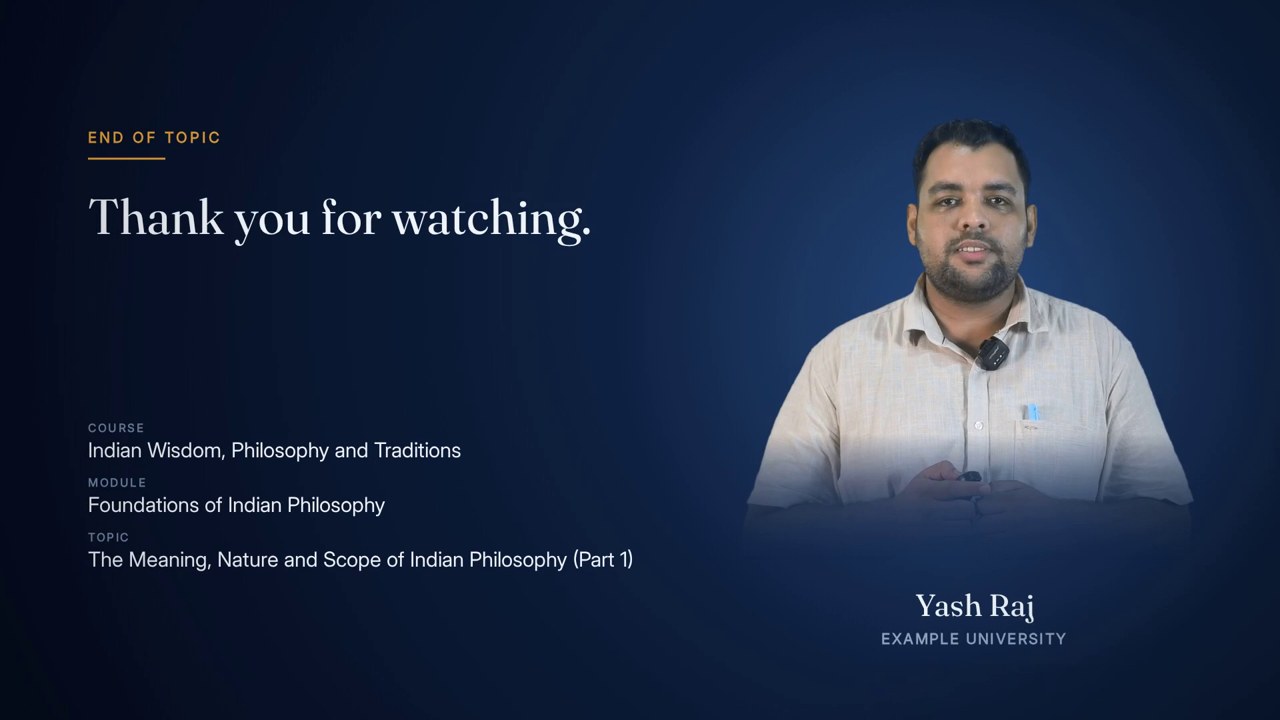
The end note at 4.4 s, held before the takeaways.
06

End-note hold

The last look at the presenter.

The end note holds for the second half of its length before the key takeaways. It is the last frame on which the presenter is seen, so it is held long enough to register the name.

Anatomy
  • Held from about 2.25 s to 5.0 s
Rules
  • Held, never still animating at the cut
The five-second welcome with its music cue.
07

The opening cue

Music under the welcome.

The synthesised cue is written to arrive somewhere in exactly the length of the card: four chords, each a quarter of the card (1.25 s at five seconds), moving F, B flat, F over C and back to F, so the last chord lands at the end rather than being faded down mid-phrase. A rising bell figure of eight notes starts at 0.35 s and settles on the home note. It fades in over 0.12 s and out over the last 1.4 s. F major was chosen because it is warmer than C and does not sound like a fanfare.

Anatomy
  • Chords: F – B flat – F/C – F, one per quarter
  • Bell figure: F A C D C A C F, every 0.425 s from 0.35 s
  • Pad: three voices ±7 cents, low-passed around 900 Hz
  • Room: 34% wet, 1.9 s
  • High-pass 72 Hz; −20 LUFS, −1.5 dBTP
Rules
  • The cue is exactly the card's length
  • Music alone is levelled 4 LU below the narrated level
The five-second end note with its music cue.
08

The closing cue

Music under the end note.

The end note carries the same kind of short cue as the welcome, so the film is bracketed by matching sounds. The learning objectives and takeaways use a different, slower bed (a four-chord progression of 4.6-second bars, mostly pad), which is how the ear tells a bookend card from a list card without being told.

Anatomy
  • Same cue type and level as the welcome
  • Objectives and takeaways use the slower bed instead
Rules
  • Welcome and end note share one cue type; list cards use another
The first 24 seconds of the finished film: welcome, objectives and the lecture's opening.
09

The opening of the film

How the welcome hands over to the lecture.

The film opens on the welcome, cuts to ten seconds of learning objectives, and then goes into the lecture, which by rule opens on the presenter: no cutaway is allowed in the first 15 seconds, and the animated deck must have appeared by 0:15 of the lecture. So the first half minute runs institution and topic, then what you will be able to do, then the person, then the material.

Anatomy
  • 0:00–0:05 welcome
  • 0:05–0:15 learning objectives
  • 0:15 onward the lecture, presenter first
Rules
  • Presenter opens the lecture; no cutaway before 15 s of lecture time
The last 26 seconds of the finished film: the end of the lecture, the end note and the takeaways.
10

The close of the film

How the lecture hands over to the end note.

The lecture's last 25 seconds are kept free of cutaways, so the teaching ends on the lecture itself. Then the end note, then the key takeaways, which are the last thing on screen: the film ends on what to carry away rather than on a thank-you.

Anatomy
  • No cutaway in the lecture's last 25 s
  • End note (5 s), then key takeaways (10 s)
Rules
  • The takeaways, not the end note, are the film's final frame
11

The narrated variant

A voiced welcome and end note, on request.

The cards can be narrated instead. The welcome then reads, for example, 'Welcome to [Institution] Online. Today's topic is … and it will be delivered by …, from [Institution].' The end note reads 'I hope you enjoyed the lecture by …, from …'. The voice is matched to the presenter and slowed slightly so it can be followed off the screen; the narration is transcribed and each part of the card arrives on the word that names it, the name on 'delivered by'. The card then runs as long as the read plus 1.6 s, and the music is ducked by about 11 dB under the voice.

Anatomy
  • Voice matched to the presenter
  • Delivery speed 0.88
  • Card length = read + 1.6 s
  • Music ducked about 11 dB under speech; voice mix at −16 LUFS
Rules
  • Off by default: five seconds of welcome read aloud becomes about seventeen
  • Without a chosen narrator the narrated build refuses to guess
12

The join

Five pieces into one film.

The welcome, objectives, lecture, end note and takeaways are finished separately and joined without re-encoding the picture. Before joining, every piece must have the same frame size, pixel format and frame rate, and each piece's sound is normalised to the same stereo 48 kHz format, because a joining step that meets mono in one piece and stereo in another can silently drop audio or drift out of sync half an hour in.

Anatomy
  • Picture copied, not re-encoded
  • Sound: stereo, 48 kHz, 192 kb/s for every piece
  • Common 30 fps timebase
Rules
  • Mismatched pieces stop the join
  • The result must be within 0.35 s of the sum of its parts

Rules

The rules, and the reason for each.

Hard rules are checked by the engine and stop delivery if they fail. Guides steer the choice but can give way when the lecture needs it.

TypeRuleWhy
HardEvery film opens with a welcome and closes with an end note.A playlist of lectures from different rooms and presenters should open and close the same way.
HardThe running order is welcome, objectives, lecture, end note, takeaways.Who and what first, then the goal; the film ends on what to carry away.
GuideThe welcome and end note are 5 seconds each by default.The hook of a lecture should not arrive late; a long title sequence costs viewers before the teaching begins.
GuideThey carry music and no voice by default.A student does not need five words read aloud, and reading them stretches a 5-second card to about 17.
HardAll card copy comes from the course sheet row for the recording.Nothing is retyped or guessed; the card cannot disagree with the course record.
HardMissing lecture metadata stops the build.A title card built on guessed names is worse than no film.
HardIf the presenter's name is not settled, the cards carry no name.The honest card has no name rather than the wrong one.
HardBeats are fractions of the card's length.Changing the length re-times the card instead of breaking it.
HardEverything is on screen a little past halfway, then held.A card still arriving at the cut reads as a glitch.
GuideThe presenter's name arrives last.The eye goes from what the lecture is to who is teaching it.
HardThe cards use the lecture's own renderer, fonts and template style.They belong to the same film rather than looking like a separate bumper.
HardThe cards stand on the presenter's stage ground.The film opens and closes on the same set the presenter appears on.
HardNo progress bar or clock on the cards.Those describe the lecture; a title card is not part of its length.
GuideThe music cue is exactly the card's length and resolves at its end.A cue faded down mid-phrase sounds like a mistake.
HardMusic alone is levelled to −20 LUFS, narrated cards to −16.A bed with nothing over it, at speech level, would be the loudest thing in the lecture.
GuideA supplied track is cut starting on a bar line.A bed that starts mid-bar sounds wrong even to someone not listening for it.
GuideEverything below 72 Hz is removed from synthesised cues.It is only rumble, and on laptop speakers it becomes buzz.
HardPieces must match in frame size, pixel format and frame rate before joining.Joining mismatched pieces would reframe one of them.
HardEvery piece's sound is normalised to one format before joining.Mixed formats can be silently dropped or drift out of sync deep into the film.
HardThe joined film must be within 0.35 s of the sum of its parts.Anything more means something was dropped.
HardThe logo is burned in after the join, over the cards too.The mark must not blink at the joins.
HardThe narrated option refuses to run without a narrator matched to the presenter.A mismatched voice is worse than a stopped build.

Settings

Every setting, with its value.

These are the values the engine runs with today. The name in small type is the setting as it appears in the engine, for anyone comparing notes with a producer.

SettingValueWhat it does
Welcome lengthseconds5.0 sCan be changed per piece; the beats re-time themselves.
End-note lengthseconds5.0 sAs above.
Objectives / takeaways lengthseconds10.0 s eachThe two list cards, covered on their own page.
Beat unitlength ÷ 5One beat is 1 s on a 5-second card.
Arrival times (beats)kicker 0.10, portrait 0.40, title 0.55, rows 0.95 / 1.25 / 1.55, name 1.75When each part of the card starts to arrive.
Frame rateFPS30Cards render at the lecture's rate.
Music-only loudness−20 LUFS, −1.5 dBTP, LRA 11Target level for a card with no voice.
Narrated loudness−16 LUFS, −1.5 dBTP, LRA 11Target level when the card is voiced.
Music high-pass72 HzRumble removed from synthesised cues.
Opening cue room34% wet, 1.9 s tailReverb on the welcome and end-note cue; the slower list bed uses 42%.
Supplied track fadesFADE_IN / FADE_OUT0.30 s / 0.90 sFades on an excerpt cut from a supplied track.
Pre-roll before the downbeatPRE0.06 sA breath before the bar line so the first beat is not clipped.
Tempo search range60–180 bpm in 0.25 stepsUsed to find bar lines in a supplied track.
Narration speedSPEED0.88Narrated variant only: slowed so it can be read along with.
Narrated hold1.6 s after the last wordNarrated variant only: time to look at the card.
Music under voiceLEVEL0.30, ducked about 11 dBNarrated variant only.
Sound for joiningStereo, 48 kHz, 192 kb/sEvery piece is normalised to this before the join.
Join toleranceTOL0.35 sMaximum difference between the joined film and the sum of its parts.

Checks

What is verified before it ships.

Metadata present

The lecture's course-sheet fields must exist; a missing field stops the build.

Portrait decoded before rendering

The presenter's cut-out is loaded before the first frame, so no frame can be drawn without it.

Fonts loaded

The style's typefaces are loaded before rendering; a missing typeface fails loudly rather than rendering in a fallback.

Pieces match

Frame size, pixel format and frame rate are compared across all five pieces before the join.

Join length

The joined film must be within 0.35 s of the sum of the five pieces.

Sound traces back

The final guard cross-correlates the marked film's sound with the lecture's cut audio at three points and requires it at exactly the 15-second offset the welcome and objectives create.

Worked example

In a real lecture

For the Indian philosophy lecture the welcome's kicker reads the institution's online name, and its title is 'The Meaning, Nature and Scope of Indian Philosophy (Part 1)'. The rows read Bachelor of Business Administration, Indian Wisdom, Philosophy and Traditions, and Foundations of Indian Philosophy. The presenter, Yash Raj, is cut out of his own recording on the right, with the institution's name beneath his name. All of it came from row 7 of the course sheet: BBA-011, Semester 3, Module 1, Topic 1 of 30.

The kicker arrived at 0.10 s, the portrait at 0.40 s, the title at 0.55 s, the three rows at 0.95, 1.25 and 1.55 s and his name at 1.75 s. The card was fully assembled by about 2.25 s and held to 5.0 s.

The finished film runs 22 minutes 52 seconds: 5 s of welcome, 10 s of objectives, 22 minutes 22 seconds of lecture, 5 s of end note and 10 s of takeaways. The lecture opens on the presenter with captions for its first 12.9 seconds; its last 25 seconds are clear of cutaways. The end note reads END OF TOPIC, 'Thank you for watching.', with the course, module and topic beneath.

5.0 s, music onlyWelcome
5.0 s, music onlyEnd note
22:22Lecture
22:52Finished film
about 2.25 sCard fully assembled
BBA-011, topic 1 of 30Course sheet row

Limits

What it deliberately does not do.

  • It is not an animated logo sting or a filmed bumper; the cards are typographic and share the lecture's design.
  • It does not write copy: the card says what the course sheet says, and cannot invent a missing module or topic.
  • It does not narrate by default; the voiced version is an option and makes the cards longer.
  • It does not produce a separate mid-lecture lower-third for the presenter; the name appears on the welcome and end-note cards.
  • With a supplied music track, the four cards currently draw their excerpts from the same part of the track by cue type, rather than four different windows.
  • It does not produce a standalone trailer or course promo; that is separate work.

Works with

How it meets the other effects.

Questions

What educators ask about it.

Can we use our own music?

Yes. Supply a track and the cue is cut from it, starting on a measured bar line with short fades, instead of the engine's own synthesised cue.

Can the welcome be longer?

Yes. Its length is a setting; the beats are fractions of the length, so an 8-second welcome simply arrives and holds more slowly.

Can it be spoken?

Yes. The narrated option voices the welcome and end note with a voice matched to the presenter, and each part of the card arrives on the word that names it. It makes the cards longer, which is why it is off by default.

Where does the text on the card come from?

From the course sheet row for that recording: institution, programme, course, module, topic and presenter. Correct the sheet and the cards correct themselves on the next build.

Why does the film end on the takeaways rather than the thank-you?

Because the last thing a student sees is what they are most likely to remember, and that should be the ideas worth carrying away.

All effects

Every effect has a page like this one.

See this effect on your own lecture.

Send a recording and we'll run it through the pipeline as a pilot — one free sample per institution.